Sleep is not something your brain switches off to enter. It is something your nervous system has to shift into, moving away from alertness, from monitoring, from the low-grade threat detection that runs in the background of modern life. What research is starting to show is that certain sounds, specifically natural sounds, actively support that shift in ways that silence, music, or white noise do not. This article covers what the science says, why some sounds work better than others, and why the format of the recording matters more than most people realise.
Written by Elise de Bres
What your nervous system is doing when you try to sleep
Your autonomic nervous system has two main modes. The sympathetic mode (often called fight-or-flight) keeps you alert, responsive, and ready to react. The parasympathetic mode (rest-and-digest) is the state your body needs to be in for sleep to happen. Heart rate slows. Breathing deepens. The brain stops scanning for threats.
The problem is that our acoustic environment matters to this switch. Urban noise (traffic, appliances, notifications) keeps the sympathetic system mildly activated. You may not consciously notice it, but your body does.
Researchers at Brighton and Sussex Medical School tested exactly this. In a study published in Scientific Reports (Gould van Praag et al., 2017), participants listened to natural and artificial soundscapes inside an MRI scanner while their brain activity and autonomic nervous system responses were measured in real time. Natural sounds produced a measurable shift: the body moved toward parasympathetic activity. Artificial sounds did the opposite: brain patterns reflected inward-focused attention, associated with worry and rumination.
The lead researcher noted specifically that poor sleep causes autonomic stress, and autonomic stress causes poor sleep. These two are linked in a loop, and sound is one of the levers. You probably know the feeling when your sleep is disturbed by unwanted sounds, and how that can take its toll on your productivity, focus, and mood the next day.

The brain is in a different mode
The same Brighton and Sussex study found something interesting about what happens to the brain under natural sound. The default mode network (the area active during rest and mind-wandering ) behaved differently depending on what people were hearing.
Under natural sounds, the brain reflected outward-directed attention: soft, diffuse, not fixed on any particular worry or problem. Under artificial sounds, it reflected inward-directed attention: self-referential, ruminative, the mental state most associated with lying awake at 2 am thinking about things you cannot control.
This is not a subtle distinction. Inward-directed attention patterns are what researchers observe in anxiety, depression, and PTSD. The shift to outward attention that natural sounds produce is, neurologically, the direction of sleep. This is different from the turning inward that is used in meditation; for me personally, it’s like an involuntary turning inward that is more an anxiety-based loop that’s difficult to break from. I find it important to note this because the emphasis on turning inward can have different meanings in different contexts.

What the broader research shows
A 2021 synthesis published in PNAS (Buxton et al., 36 studies) found consistent improvements in health and positive affect from exposure to natural sounds, along with significant reductions in stress and annoyance. The effects held across hospitals, offices, and outdoor settings. For the full picture on what the research shows across all nature sounds, read: Your brain on nature sounds: what the research actually shows.
One finding is directly relevant to sleep: water sounds (rain, rivers, ocean) were most strongly linked to positive emotional states and health outcomes. Not birdsong, which was more associated with reduced anxiety and stress. Water sounds and birdsong produce different effects, and, specifically for sleep preparation, water-based sounds show the strongest pattern in the research. For a focused look at why rain specifically works for sleep, read: Rain sounds for sleep: why they actually work.
The mechanism is thought to be evolutionary. Water sounds carry no threat signal. They do not demand monitoring. The brain receives them as background safety, the acoustic equivalent of being in a place where nothing dangerous is happening. That is precisely the state a nervous system needs to shift toward sleep.
Distant thunder works similarly, and this surprises most people, at least it did me. Rather than activating alertness, a low rumble in the distance tells the nervous system: the storm is far away, shelter is working, nothing requires a response. It creates an enclosure effect that reinforces the safety signal of rain rather than breaking it. The key is distance. A slow rumble moving through is neurologically different from a sudden crack overhead, which produces a startle response. The Sussex study included thunder as part of the natural sound condition that produced parasympathetic activation; it was not tested in isolation (only thunder sounds).
Why your environment matters more at night
During the day, you have tasks, conversations, and movement. These provide your nervous system with additional inputs to process. At night, when you are still and trying to sleep, the acoustic environment becomes much more significant.
A quiet room is not the same as a neutral room. For many people (particularly those in cities), quiet reveals the low-level hum of appliances, distant traffic, neighbours, and the general texture of urban noise. These sounds are not loud enough to consciously register as disruptive, but they are enough to maintain a low level of sympathetic activation. To give you an easy example. That fan in the bathroom that you do not hear during the day in your bedroom can suddenly be the noisiest sound in the world. Or some high-pitched frequency from a light, a charger, or the hum from your fridge or heater. Those are all sounds you hardly or not notice during the day but can have an impact at night.
Natural sound does something different from silence in this context. It provides what researchers describe as a soft fascination: non-demanding acoustic input that engages the brain’s environmental monitoring system just enough to stop it from scanning, without requiring any active processing. The result is a kind of acoustic permission to stop being alert. In more popular terms, this is also called masking. So by putting a wanted sound (like nature sound recordings to mask the uneasy activating sounds). If you are deciding between nature sounds and white noise for this purpose, we compared them directly here: Rain sounds vs white noise: which actually works better?

Does listening to recordings actually help with sleep?
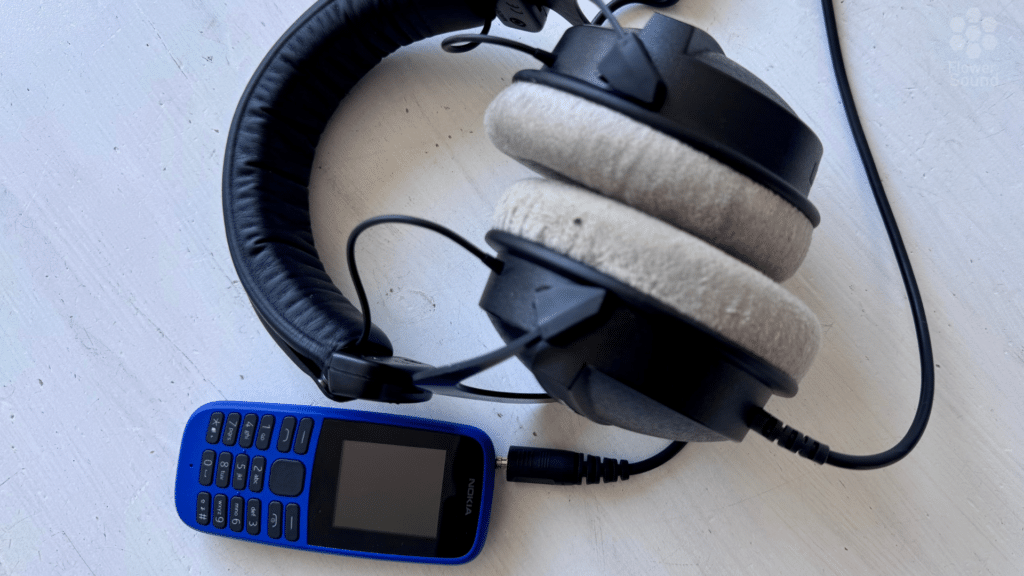
This is the practical question, and the answer is worth being precise about. The controlled studies we’ve been drawing on (including the Brighton and Sussex MRI study and the PNAS synthesis) were conducted with recorded soundscapes played through speakers or headphones, not in real outdoor environments. The nervous system responses, the shift in brain activity, the autonomic changes all of that was measured in response to recordings. So when the research says natural sounds help with sleep, it means recordings too.
The variable that determines whether it actually works for you is the kind of recording. The nervous system is not easily fooled. A file that loops every 30 seconds creates a subtle but detectable pattern and once your brain notices it, it flags the sound as artificial. That small recognition is enough to keep a thread of alertness running. It is the opposite of what you need.
What works is length and authenticity. A recording long enough that it never repeats within a single sleep session, captured in a real place, with the natural irregularity of weather (shifting rain intensity, the unpredictability of wind, or just some birds singing). When those qualities are present, the brain has nothing to decode. The sound is there, the way an environment is simply there, and the nervous system can stop its background monitoring.
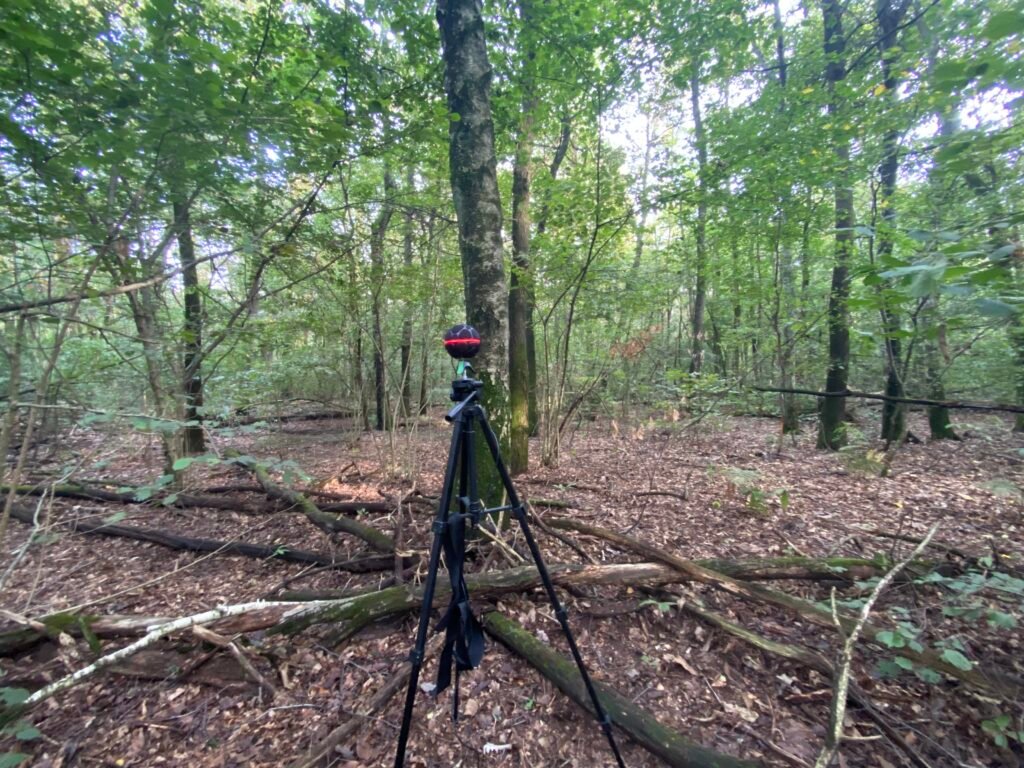
The format of the recording changes what your brain does with it
There is a detail about sleep and audio format that rarely gets discussed, and it matters more than most people expect.
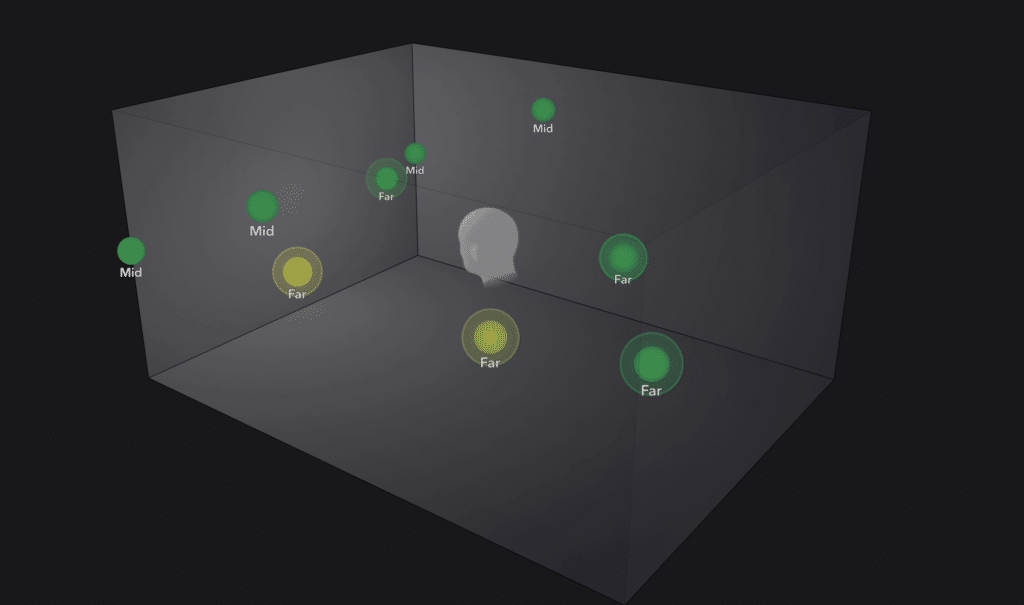
Sleep requires the brain to progressively disengage from external monitoring. Standard stereo recordings (two channels, left and right) create a subtle spatial mismatch. Your brain’s spatial processing runs constantly, and it registers that the sound is coming from in front of you rather than from the space around you. That is enough to maintain a low level of orientation a mild version of the same attentiveness that keeps you from fully letting go.
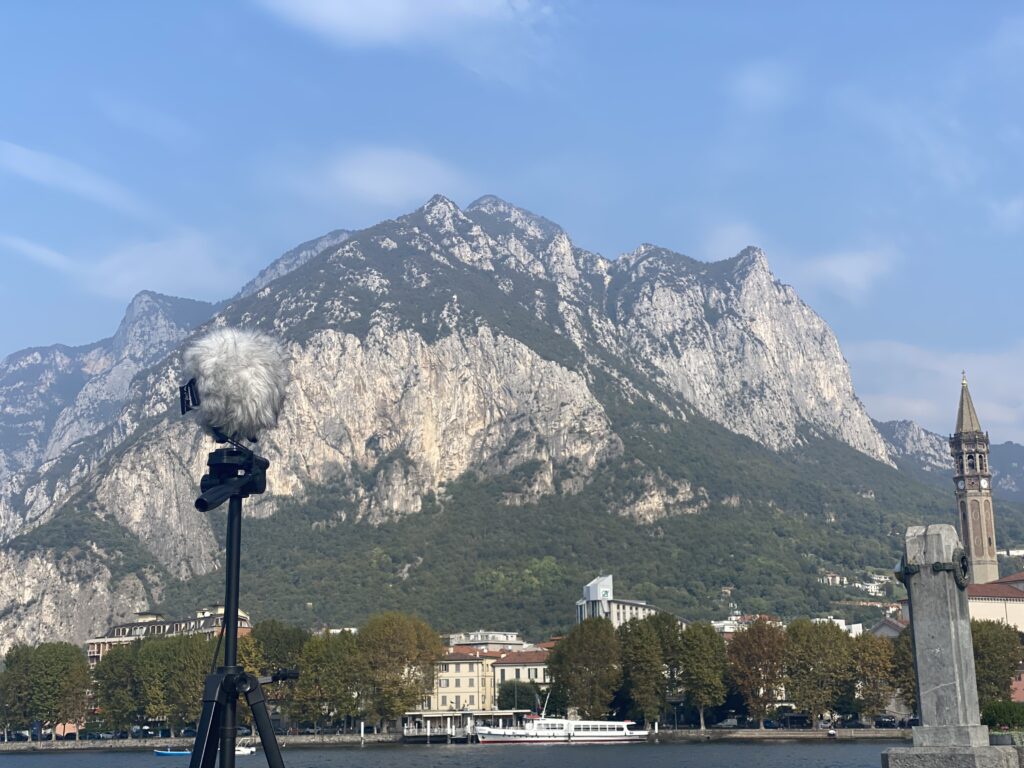
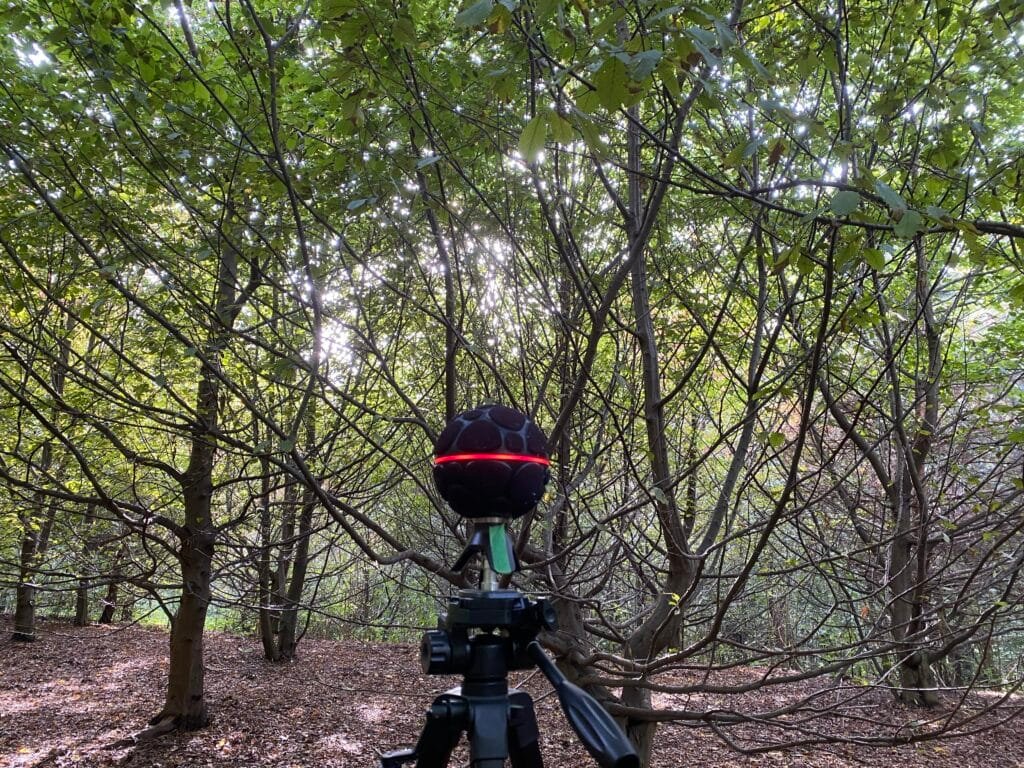
3D recordings, captured with ambisonic microphones that record all directions simultaneously, deliver the full spatial picture your brain expects from a real environment. Above, below, behind, to the sides. When you listen through headphones or with an immersive audio system, your brain no longer has to resolve the mismatch. The orientation system receives what it needs and goes quiet. That is the state that allows deep sleep to follow.
We wrote about the neuroscience behind this more fully in Why Nature Sounds Feel More Real in 3D. For sleep specifically, the short version is this: anything that keeps a part of your brain lightly engaged is a problem. 3D audio removes one of those things.

What Rain & Thunder was built for
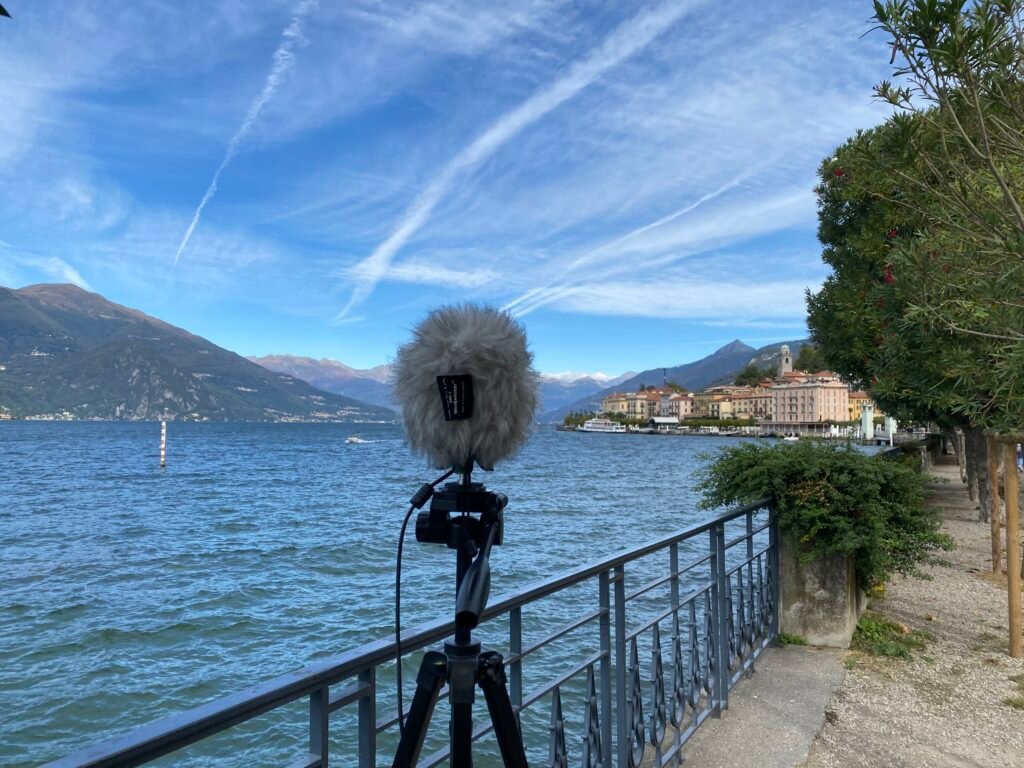
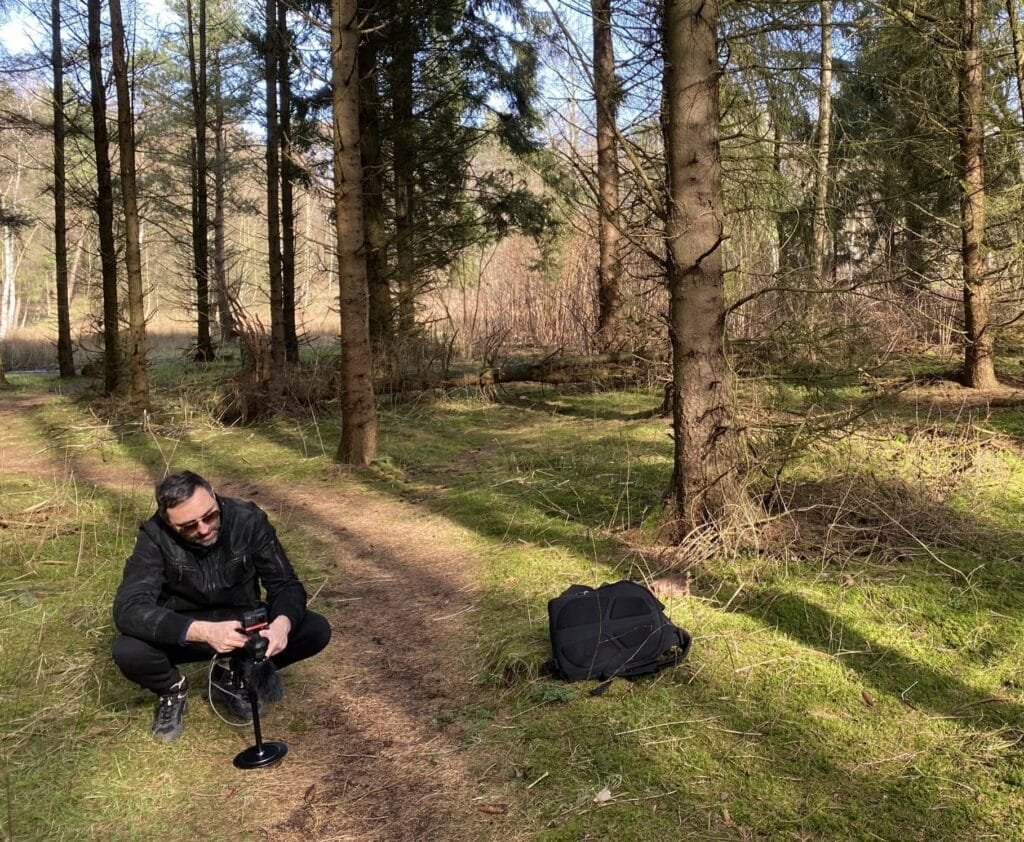
The research on water sounds and sleep kept pointing toward the same qualities: long duration, real environments, spatial depth, no loops. Those were the requirements. Rain & Thunder is our first Sounding Nature release, and it was recorded with exactly those constraints in mind. You can read about where and how it was recorded here: Recording Rain & Thunder: where this album came from.
Eight tracks. 80 minutes of continuous rain and distant thunder recorded on location in Europe. Each track is a single unbroken take: the rain intensifies and softens, the thunder moves through at its own pace, the acoustic character of the place changes with the weather. Nothing was added or smoothed. The binaural version for headphones places the rain in the full spatial field around you. The Dolby Atmos version does the same through a home theatre system.
It is, as far as we know, what the sleep research has been describing without quite having access to it.
Where to start
Preview tracks are on the Rain & Thunder page. The difference between a binaural field recording and what you’ll find on most streaming platforms is immediate and it’s the kind of thing that’s faster to hear than to explain.
If you’d like to go deeper on the spatial audio piece (why 3D recordings feel different and what that does neurologically) read: Why Nature Sounds Feel More Real in 3D.
Related reading from the journal
- Does birdsong actually signal safety? – why feeling safe appears to be the precondition for rest, not the same thing as it.
- Birdsong from a forest you know is more relaxing – which landscape a recording comes from may matter more than how much is happening in it.
Sources
— Gould van Praag et al. (2017). Mind-wandering and alterations to default mode network connectivity when listening to naturalistic versus artificial sounds. Scientific Reports, 7, 45273. Brighton and Sussex Medical School.
— Buxton et al. (2021). A synthesis of health benefits of natural sounds and their distribution in national parks. PNAS, 118(14).
— TIME (2017). Why Nature Sounds Help You Relax, According to Science.