Not a technical explanation. Just an honest one.
If you’ve read our article on cymatics, how sound frequencies create visible geometry in water and sand, you may have been left with a question we didn’t fully answer there: if sound can do that to matter outside the body, what is it doing inside it?
It’s a good question. And it’s why so many people exploring sound for wellbeing end up going down rabbit holes that seem promising at first, then confusing, and then a little unsatisfying.
This article is an attempt to give you a clearer map. Not by dismissing the curiosity, it’s legitimate, but by being honest about where the science actually is, and where it isn’t. And then pointing you toward something that, in our experience after years in this field, genuinely works differently. That something is immersive audio. But before we get there, we need to talk about how you hear.

You Were Never Meant to Hear in Stereo
Close your eyes for a moment and listen to where you are right now. Sound is reaching you from every direction simultaneously above, below, left, right, in front, and behind. Your brain is processing all of it, constantly building a three-dimensional map of your environment. This is how human hearing works. It always has.
Stereo, the audio format used in virtually every song, podcast, and video you’ve ever heard, reduces that three-dimensional reality to two channels: left and right. It was invented in the 1930s as a way to create a sense of space using the technology available at the time. For what it is, it works remarkably well. But it is a simulation of space, not space itself.
When you listen to stereo through headphones, your brain knows something is slightly off. The sound appears to come from inside your head rather than around you. There is a small but constant cognitive effort involved in interpreting an audio signal that doesn’t match how your auditory system expects sound to arrive. You don’t notice it consciously. But your nervous system is doing extra work.
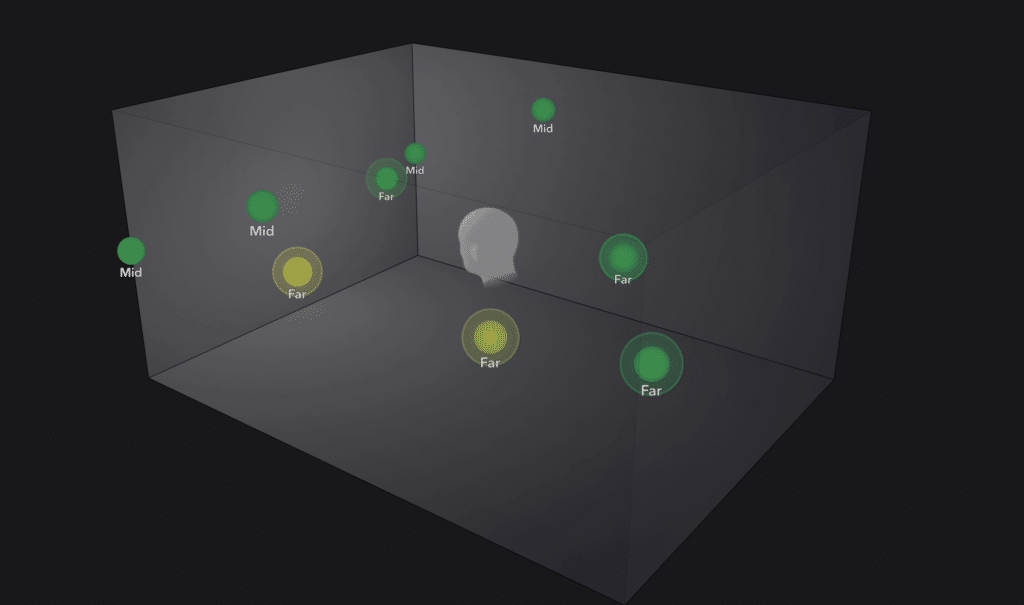
Immersive audio, also called spatial audio, restores what stereo removes. Sound comes from all directions, at the right distances, with the acoustic signatures of real spaces. Your brain’s spatial processing system receives input and recognises it. The extra cognitive work disappears. This is the most straightforward reason immersive audio feels different. It’s not mystical. It’s not about a specific frequency. It’s about giving your auditory system input that matches how it was built to receive sound.

What This Has to Do With Resonance and the Hexagon
In our hexagon article, we explored how the hexagon appears across nature in honeycombs, snowflakes, the structure of water molecules, even the carbon rings that form the chemical basis of life. The connection to sound comes through cymatics: when specific frequencies vibrate physical matter, hexagonal and honeycomb patterns reliably appear. Sound, it turns out, is one of the forces that organises matter into nature’s most efficient shapes.
The principle underneath this is resonance. Every physical object, including the human body, has natural frequencies at which it vibrates most efficiently. When an external sound matches those frequencies, the object begins to vibrate in response without being touched, in the same way a tuning fork across the room will start to ring when you strike one beside it.
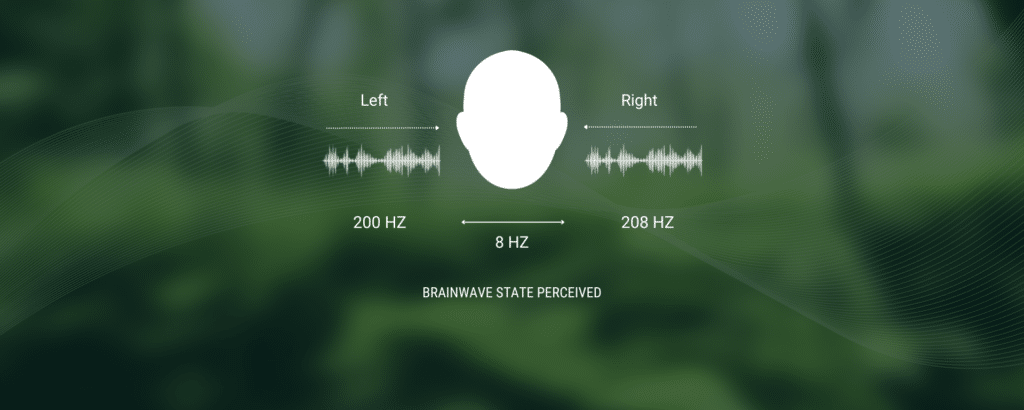
This is physics. What is more complicated is the leap from ‘resonance is real’ to ‘this specific frequency will produce this specific effect in your body.’ That’s where the claims in the sound healing world often outrun the evidence as we explored in our article on 432 Hz.
What we can say with more confidence is this: the quality and spatial character of sound affects how your nervous system responds to it. A sound that surrounds you and matches the acoustic character of a real environment, like a forest, a river, or a mountain, engages your auditory system differently than a flat stereo signal. That difference is neurological and not imagined.
Why Nature Sounds Specifically
Here, the science gets clearer. Of all the sound environments researchers have studied, natural soundscapes have the most consistent evidence for measurable effects on physiology heart rate, blood pressure, cortisol levels, and self-reported stress and mood.
The reason, as best as we understand it, is evolutionary. Human nervous systems spent hundreds of thousands of years calibrated to natural acoustic environments. The sound of wind through trees, water moving, birds these are signals that, at a deep biological level, indicate safety. The absence of predator sounds and the presence of resources contribute to this.
Urban and industrial soundscapes work differently. They can activate vigilance. They keep your nervous system slightly elevated, ready to respond. Which can be useful when you need to focus or be productive ofcourse depending on the noise levels. Most people in cities live in this low-grade state without recognising it as anything other than normal.
Research published in the Proceedings of the National Academy of Sciences (Buxton et al., 2021) analysed 36 studies and found that natural soundscapes produced a 28% reduction in stress and a 184% improvement in overall health outcomes compared with no-sound intervention. Bird sounds were most effective for stress; water sounds for positive emotion. These are not small effects.
What immersive spatial recording adds to this is the full three-dimensional acoustic character of a real natural environment.

What Immersive Audio Actually Sounds Like
The best way to understand the difference between stereo and spatial audio is to hear it. No description fully captures what happens when you put on headphones and listen to a binaural recording of rain in a forest, the rain in front of you, birds to your left, wind moving through the canopy above, and your brain stops working to locate the sound because the sound is simply there, around you, where sound is supposed to be.
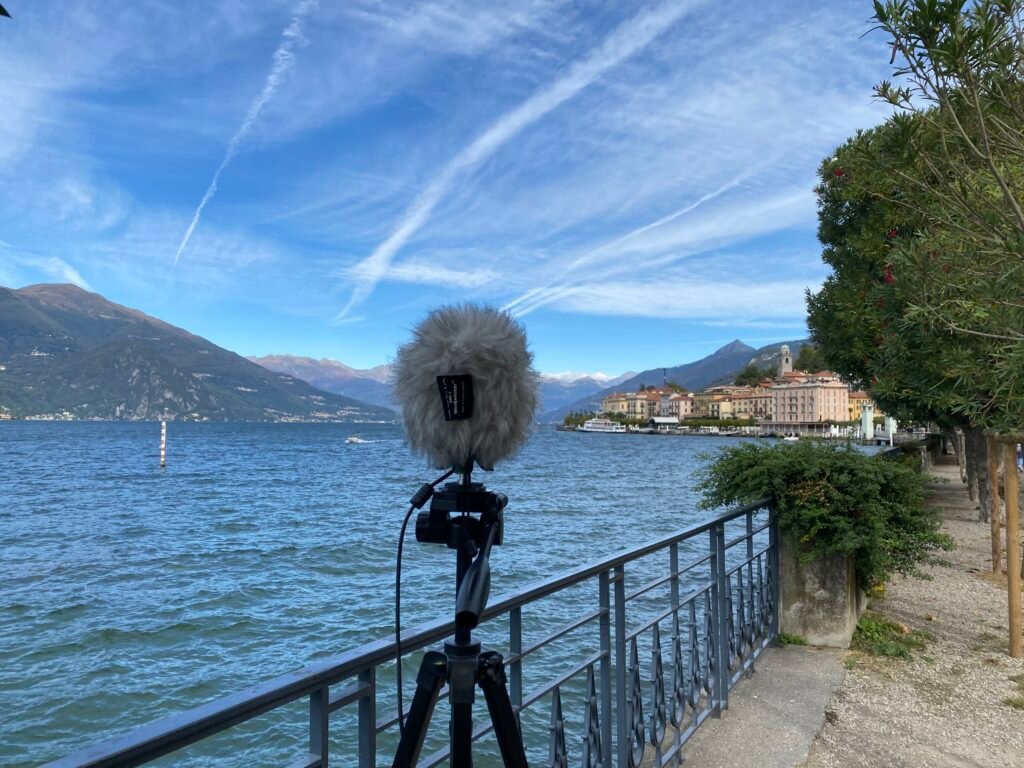
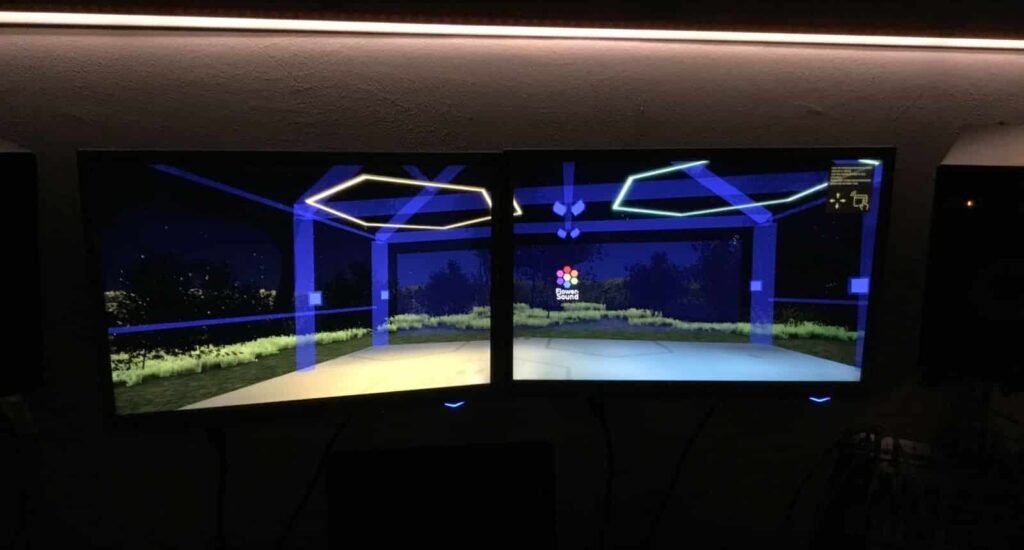
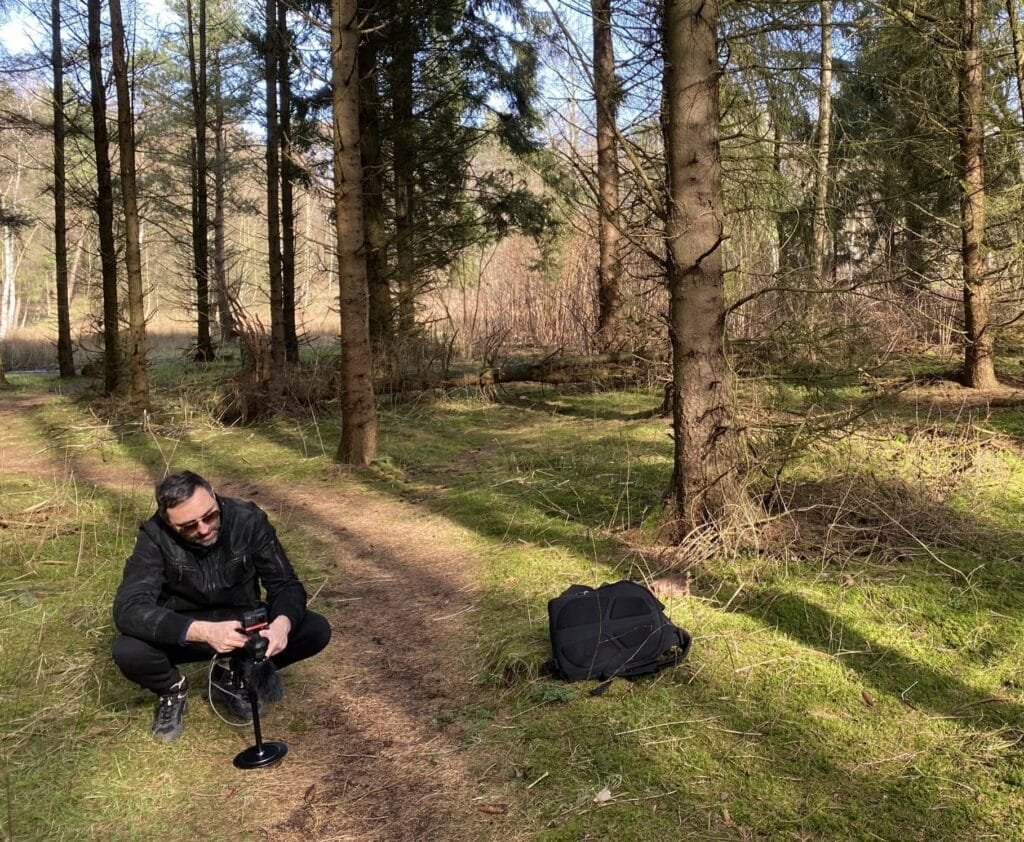
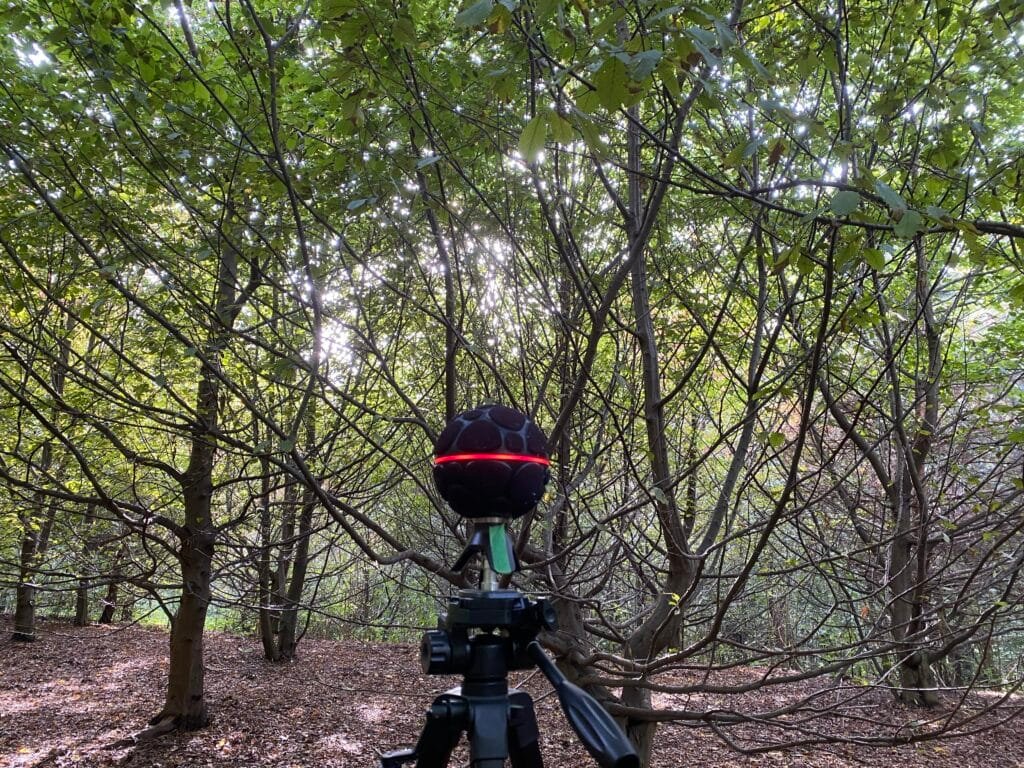
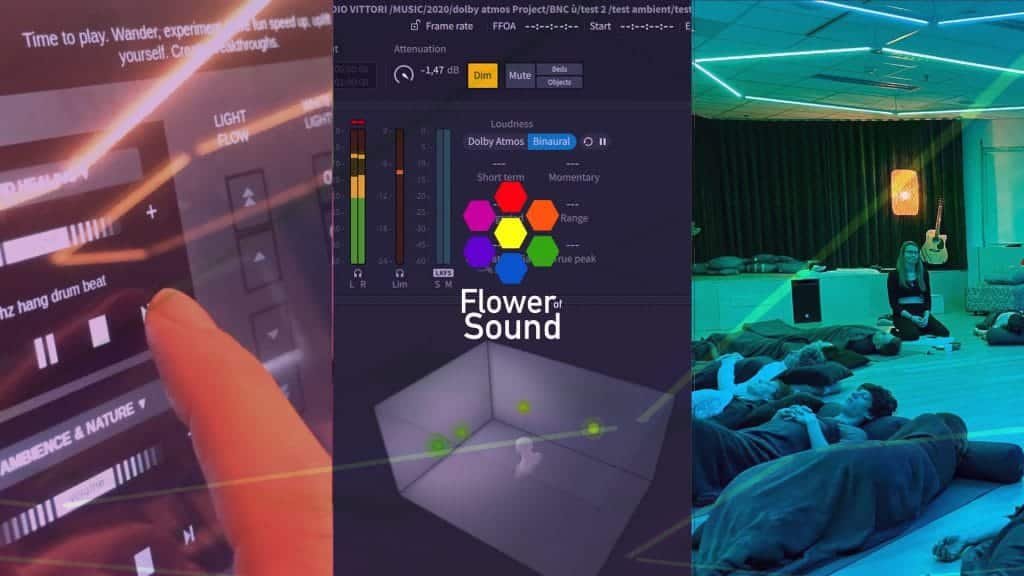
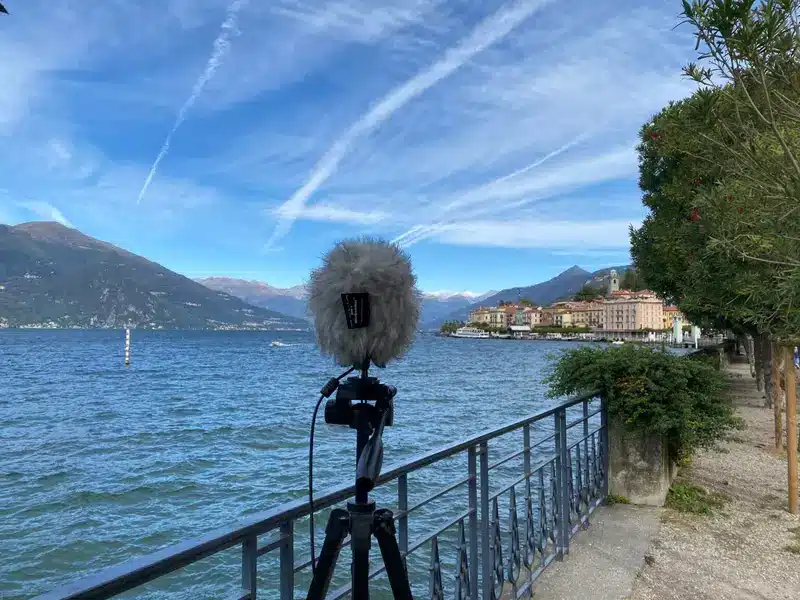
The Sounding Nature series, Flower of Sound’s archive of immersive nature recordings, was made to offer exactly this. Real environments, recorded on location across Europe using professional spatial microphones, are available in binaural format for headphones and Dolby Atmos for home theatre systems. We have recorded 1.000 hours, which will be released during 2026 and 2027. Check our shop for what’s available for purchase.
If you’ve read this far because you’re curious about what sound can genuinely do and you want to experience the difference between stereo nature audio and the real thing the best next step is simply to listen.
Click the sticky player at the bottom of your screen, plug in your headphones, and listen to rain sounds in immersive audio
Related Articles
What is Cymatics: Sound Made Visible, the science behind sound creating visible geometric patterns
The Hidden Meaning Behind the Hexagon: Why the hexagon appears in nature, sound, and the Flower of Sound identity
432 Hz: Between Fascination and Disillusionment, an honest look at one of the most persistent claims in sound healing