The debate around 432 Hz has been going on for so long that it can feel almost rude to ask a simple question: what are we actually talking about?
As an artist first, and as Creative Director of Flower of Sound, I have spent years working with sound: modular synthesisers, analogue gear, field recordings, spatial audio, music made to change the feeling of a room. And yes, I tuned my modular instruments and synthesisers to 432 Hz too. I understand the attraction. I wanted it to be true.
The idea is seductive: one number, nature, the body, ancient knowledge, the cosmos, a secret lost when the world chose 440 Hz. It is a beautiful story. The problem is that a beautiful story is still not evidence.
This is not an attack on anyone who has found comfort in music tuned to A4 = 432 Hz. An experience can be real without becoming a universal law. Music can move you, calm you, even accompany you through something difficult, without the tuning reference being a medicine, a cosmic code or a hidden truth.
I care about this because sound matters too much to leave it in the hands of people selling magic numbers.
Sound is powerful. That is precisely why we have to be precise.
Music affects attention, memory, mood, movement and the way we experience space. There is still a huge amount to study about the relationship between sound and psychological and physical well-being.
Steven Mithen, in The Singing Neanderthals, published in Italian as Il canto degli antenati, proposes that before language as we know it, our ancestors may have used a more musical, embodied form of communication. It is a debated hypothesis, not a settled fact. But it points to something worth taking seriously: sound may have carried meaning before words could carry it in the way they do now.
That is close to why sound matters so much to me. From Stockhausen, I learned to listen to sound as space, matter and imagination, not merely as something that fills the air. From Rouget, Ernesto De Martino and others, I learned that sound, rhythm and ritual can help a community give form to experiences that words alone cannot contain.
None of this proves that 432 Hz heals anything. It does show that sound deserves better than miracle claims and internet numerology. When unsupported promises dominate the conversation, serious people may dismiss the entire subject, including the art, research and listening that actually matter.
One tone, one piano, one piece of music: three different things
A pure 432 Hz sine tone is one simple vibration: a single, clean line.
When people say “432 Hz music,” they usually mean music tuned with A4 = 432 Hz. A4 is the A above middle C: a reference point used to tune the instrument. It does not mean that every sound in the piece is 432 Hz, nor that the listener is sitting inside one pure, medically meaningful frequency. It may seem stupid to point this out, but it is important to underline it.
Strike A4 on a piano tuned to 432 and you already hear far more than one line. The string has a fundamental near 432 Hz and higher partials near 864 Hz, 1296 Hz, 1728 Hz and beyond. In a real piano, those partials are not even perfectly exact multiples: string stiffness makes them slightly inharmonic, and piano tuners normally stretch octaves a little to make the instrument sound right.
Now play middle C on that same piano. Its fundamental is about 256.87 Hz. Its own partials rise from there: roughly 513.74 Hz, 770.61 Hz and beyond. They are not the partials of the A at 432 Hz.
This is the point people skip: a piano does not contain one harmonic series called “432.” Every key has its own fundamental and its own partials. A chord is several such series meeting at once. A piece of music is a moving field of them.
Across a whole composition, instruments enter and leave, notes overlap, reverberation creates reflections, and every instrument brings its own spectrum. The reference note is the address on the envelope. It is not the whole letter.
The keyboard itself breaks the fantasy of a single harmonic universe
Most pianos, keyboards and synths are built around twelve-tone equal temperament. An octave is divided into twelve equal logarithmic steps. Starting from A4 = 432 Hz, each semitone is multiplied by:
2^(1/12)
So the notes are calculated as:
frequency = 432 × 2^(n/12)
where n is the number of semitone steps away from A4.
This is a brilliant and practical compromise. It lets us move between keys, play chords and write music that works across instruments. But it is not a scale generated from the exact harmonic series of 432 Hz.
Only the octave lands exactly on a simple ratio: A5 = 864 Hz, which is 2:1. Other notes are tempered approximations. For example, the equal-tempered E above A4 is about 647.27 Hz; a perfect 3:2 fifth above 432 would be 648 Hz. Close, useful, beautiful, but not identical. That small compromise is the price of making a keyboard work in every key.
| Claim | What is actually happening |
|---|---|
| “A piano at 432 is made from 432 harmonics” | Only the A string has a fundamental near 432 Hz. Every other key starts from its own frequency. |
| “432 makes the whole scale natural” | Equal temperament divides each octave into 12 equal steps; apart from octaves, those steps are compromises, not pure integer ratios. |
| “C is exactly 256 at A = 432” | In twelve-tone equal temperament, C4 is about 256.87 Hz. To make C4 exactly 256 Hz, A4 would need to be about 430.54 Hz. |
| “432 carries the golden ratio” | The golden ratio is not part of the tuning equation, nor of the harmonic series. |
Why the golden ratio does not make 432 Hz a special tuning
The golden ratio: a nice number that was invited to the wrong party
The golden ratio, φ, is approximately 1.618. It appears in some mathematical and natural contexts. It can be a wonderful compositional or visual proportion. But it is not hidden inside an A4 = 432 Hz piano tuning.
The arithmetic is enough:
432 × φ = 698.99 Hz
That number is neither a whole-number harmonic of 432 nor one of the equal-tempered piano notes. In a piano tuned to A4 = 432 Hz, it falls between F5 (about 685.76 Hz) and F♯5 (about 726.55 Hz).
So there is no “golden-ratio tuning” to uncover here. There is only a number being attached to another number because the story sounds extraordinary. The golden ratio can be an artistic idea; it is not the mathematical basis of a piano, a synth or an orchestra tuned to 432.
Did You Know? “Ancient 432 Hz” is a modern claim
Ancient musicians could tune instruments, hear intervals and build sophisticated musical systems. They did not need a frequency counter to make music. But saying that they used A4 = 432 Hz is a very different claim: it assigns a precise, standardised modern measurement to traditions that used local instruments, local pitches and local tuning practices.
Heinrich Hertz did not invent music, pitch or the idea of vibration. His late-nineteenth-century experiments helped establish the modern scientific understanding of frequency, and the unit hertz was later adopted for cycles per second. Pitch could be measured before the unit received that name. France adopted A = 435 vibrations per second in 1859, but that is precisely the point: shared numerical standards belong to modern acoustics, not to an ancient universal secret.
So an old instrument that happens to measure near 432 Hz today does not prove that an ancient civilisation chose a universal 432 reference, let alone attached cosmic or therapeutic meaning to it. Local tunings existed. Evidence for an ancient, universal 432 Hz standard does not.
Verdi: worth keeping, but for the right reason
Giuseppe Verdi belongs in this conversation, because he genuinely cared about pitch. But he did not care about sacred geometry.
Verdi opposed the gradual rise of orchestral pitch because higher tuning made opera more demanding for singers. He wanted a stable, lower reference that protected voices and made performances more consistent.
It is worth getting the order right, because it is usually told backwards. Through the 1870s Verdi supported the French diapason normal at A = 435 Hz. Only later did he come to voice a slight preference for A = 432 Hz, and on strictly practical grounds: it was even more comfortable for singers. He sent Arrigo Boito to argue for 432 at the Congresso dei Musicisti Italiani in Milan, 16 to 21 June 1881. Boito made the case for Italy again at the Vienna congress of 1885, and lost: Europe went with 435.
So 432 was not a secret Verdi protected. It was a position he arrived at late, argued for openly, and saw voted down. What he never did was appeal to nature. As the musicologist Ellen Lockhart puts it, it was “in terms of standardization – and not embodiment, nature, or (god forbid) chakras” that Verdi made his case. His own complaint was about chaos between cities: “Why is it that the note which is called A in Paris, or Milan, should become a B-flat in Rome?”
That is not a mystical footnote. It is a musician thinking about singers.
Did You Know?
The obsession with a single eternal pitch is quite modern. In Verdi’s lifetime, pitch varied enormously between cities, theatres and orchestras. La Scala and other opera houses could play much higher than the French standard, which is exactly why singers and composers argued about it so fiercely.
Verdi gives us an excellent reason to discuss 432 Hz: the material reality of making music with human voices. He does not give us evidence for a cosmic frequency.
Schumann resonance is not an audio tuning fork for the planet
Another familiar trick is to connect 432 Hz to the Schumann resonance. The first Schumann resonance is an electromagnetic phenomenon of the Earth–ionosphere cavity, often quoted around 7.83 Hz. It is not an audible musical pitch, and it is not fixed: it changes with atmospheric and ionospheric conditions.
The number games only work by rounding and selecting convenient relationships. 432 divided by 7.83 is about 55.17, not a clean integer. Dividing 432 by 8 gives 54, but 8 is a rounded replacement for a variable measurement. Sharing the unit “Hz” only means “cycles per second.” It does not create a physical link between an electromagnetic resonance and a piano tuning.
What the research actually says
There have been double-blind studies comparing music at different tunings. A double-blind study means that participants do not know which version they are hearing, and the researchers collecting or analysing the results do not know either. It is a way to reduce expectation bias.
It is not a magic stamp. A small study can still be small; a result can still be mixed; another study can still find the opposite. That is exactly where we are with 432 Hz. Small studies have reported interesting, sometimes positive, sometimes null and sometimes opposite results.
In a double-blind study of patients about to have a tooth extracted, both 432 Hz and 440 Hz music reduced anxiety compared with silence, and between the two tunings there was no significant difference in how anxious people said they felt. But the same study also measured salivary cortisol, and there the 432 Hz group came out significantly lower than the 440 Hz group. I am not going to hide that result because it is inconvenient for my argument. It is one measure, in one small trial, and it has not been replicated.
The picture does not get tidier from there. A double-blind crossover study of twelve people with spinal cord injuries found sleep quality improved with 432 Hz and not with 440 Hz. A double-blind study of emergency nurses during the pandemic found both tunings reduced anxiety, with some physiological measures moving further under 432 Hz. Those two studies share a lead author, so they are not replications by independent teams. And a 2025 double-blind crossover study of kickboxers found the opposite direction: warming up to 440 Hz produced better performance than 432 Hz, though the men and women in it did not respond the same way.
Read together, these do not describe a magic number. They look more like small trials pointing in whichever direction the thing being measured happens to run: rest and anxiety in one set, physical performance in another. They are all small studies, with participant numbers between twelve and fifty-four.
The honest conclusion is not that music does nothing. It is that the published evidence does not support a universal therapeutic superiority of 432 Hz. The data are small, mixed and unresolved. That is where the conversation should stay until better evidence arrives.
The Nazi story: one crime too many, and not a real one
There are enough terrible things the Nazis did. This is not one of them. The claim that 440 Hz was imposed by the Nazis to “disharmonise” people is false. The 1939 London meeting was an international standardisation effort. Its purpose was practical: making it easier for orchestras, broadcasters, instrument makers and recordings to work together.
The later ISO standard did not turn 440 Hz into a law of nature. It made it a common reference. Musicians still choose other references when an artistic or practical reason exists. Turning a technical agreement into a Nazi plot is not history. It is clickbait with a costume on.
“8D audio”: names that sound impressive, even when the artefacts make no sense
432 Hz is not the only label being turned into a miracle online.
“8D audio” is not a recognised spatial-audio format or an eighth dimension. Most so-called 8D tracks are ordinary stereo recordings made to move left and right with automated panning, reverb and effects. It can be fun. It can be effective. But calling it 8D is marketing, not acoustics.
Real spatial audio is something else: binaural recording and rendering, Ambisonics, object-based audio, multichannel playback, carefully made immersive recordings. At Flower of Sound, this is not a word game for us. It is part of a serious, demanding practice with a whole history, vocabulary and craft behind it.
The pattern is always the same: a sensational name, a promise, and very little substance behind it.
Why this makes me angry twice
I was fascinated by 432 Hz. I experimented with it. I enjoyed it. Then I went looking for evidence and understood that most of what was being repeated online was a beautifully packaged illusion.
That makes me angry twice.
First, because it is a way of taking people for a ride: selling certainty where there is none, especially to people looking for relief, meaning or healing.
Second, because it contaminates a conversation that deserves to be taken seriously. Sound can change how we feel. Music can create memories, safety, tension, release, connection and real bodily responses. There is a lot still to study. But if we keep letting conspiracy theories, magic numbers and fake technical language dominate the room, everyone who refuses to be fooled will assume the whole movement is nonsense.
It is not.
As an artist, I do not need 432 Hz to be a miracle in order to make music matter. As Creative Director of Flower of Sound, I do not need to invent scientific claims to say that sound can be profound.
We take sound seriously. Which means we have to separate fiction from reality, even when fiction is more seductive. That is not less magical. It is the place where the real magic begins.
When a number is asked to explain too much
432 Hz is not the only number that has been given powers nobody measured. The pattern repeats.
- The hidden confusion around chakra frequencies – where the numbers assigned to the body’s energy centres actually came from.
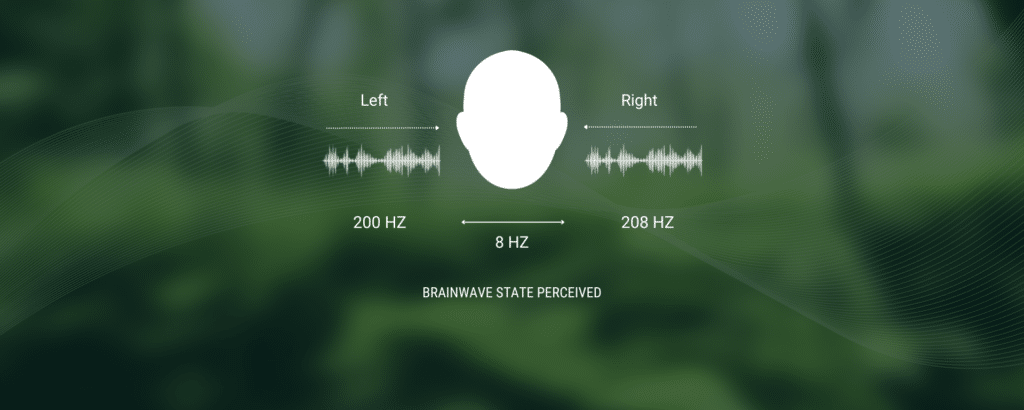
- Binaural beats: a simple explanation – what the effect is, and what it is not.
- Brainwaves and binaural beats – the entrainment claim examined more closely.
- Multicoloured sound noises – white, pink and brown noise, and what the colours actually describe.
Sound, ritual and meaning
The question underneath this article is whether a sound does something on its own, or only within a situation. That question is older than the 432 Hz debate.
- From Ecstasy to Trance: an exploration (Part 1) – Gilbert Rouget on ecstasy, trance, and why music alone does not produce either.
- From Ecstasy to Trance, Part 2 – Plato, Aristotle and Al-Ghazali on music and altered states, and how the philosophers disagreed.
- Why perception matters – why the same sound does not land the same way twice.
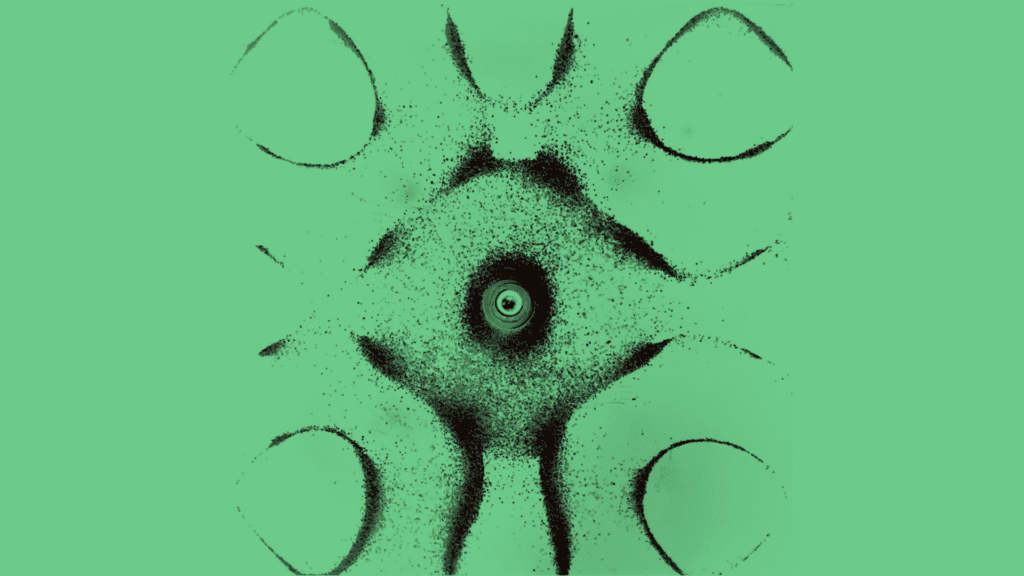
- What is cymatics: sound made visible – sound as a physical, shaping force, without the mysticism.
What we do instead
- Integrity of our sonic tools – what you hear is what you get.
- Immersive audio and modern well-being: beyond stereo – what spatial audio actually changes, and what it does not.
- Spatial audio for curious ears (Part 1) – the real vocabulary, explained properly.
Sources and further reading
- ISO: the historical story of concert pitch
- ISO 16: standard musical pitch
- BIPM: measurement units, including hertz
- University of Chicago: Verdi’s pitch preference and compromise
- Schumann resonances: review of a variable electromagnetic phenomenon
- Aravena PC, Almonacid C, Mancilla MI (2020). Effect of music at 432 Hz and 440 Hz on dental anxiety and salivary cortisol levels in patients undergoing tooth extraction. Journal of Applied Oral Science. Randomised, double-blind, n=42.
- Calamassi D, Lucicesare A, Pomponi GP, Bambi S (2020). Music tuned to 432 Hz versus 440 Hz for improving sleep in patients with spinal cord injuries. Acta Biomedica. Double-blind crossover pilot, n=12.
- Calamassi D, Li Vigni ML, Fumagalli C, Gheri F, Pomponi GP, Bambi S (2022). Listening to music tuned to 440 Hz versus 432 Hz to reduce anxiety and stress in emergency nurses during the Covid-19 pandemic. Acta Biomedica. Double-blind randomised pilot, 54 participants.
- Jebabli N, Boujabli M, Khlifi M, Ouerghi N, Bouassida A, Ben Abderrahman A, van den Tillaar R (2025). Effects of 440-Hz vs. 432-Hz preferred music frequencies during warm-up on anaerobic performance in kickboxers. PeerJ13:e19084. Double-blind crossover, 15 men and 13 women.
- Ellen Lockhart (2025). “Tuning Sounds in Italy, 1750-1885”. Nineteenth-Century Music Review 22: 344-360. Open access. The source for Verdi’s actual position on pitch.
- Steven Mithen, The Singing Neanderthals
- Audio Engineering Society: spatial audio