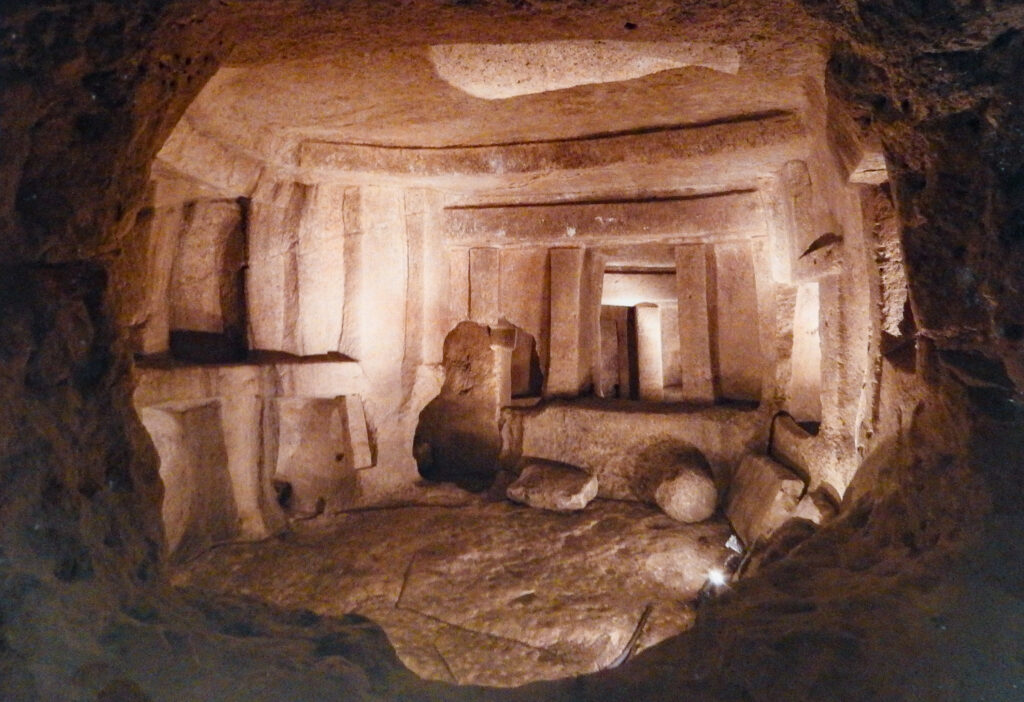
In the mid-1990s a group of researchers decided to take sound measurements inside ancient stone chambers, which nobody had really done before. Robert Jahn, Paul Devereux and Michael Ibison went into six of them, three in the UK and three in Ireland, put a sound source and meters inside, and recorded how each room responded.
They published it in the Journal of the Acoustical Society of America in February 1996. Every one of the six chambers had a strong resonance between 95 and 120 Hz.
This is where the famous number comes from.
The part that made people curious
What was interesting is that the rooms had almost nothing else in common.
From the paper: “Rudimentary acoustical measurements performed inside six diverse ancient structures revealed that each sustained a strong resonance at a frequency between 95 and 120 Hz, despite major differences in chamber shapes and sizes.”
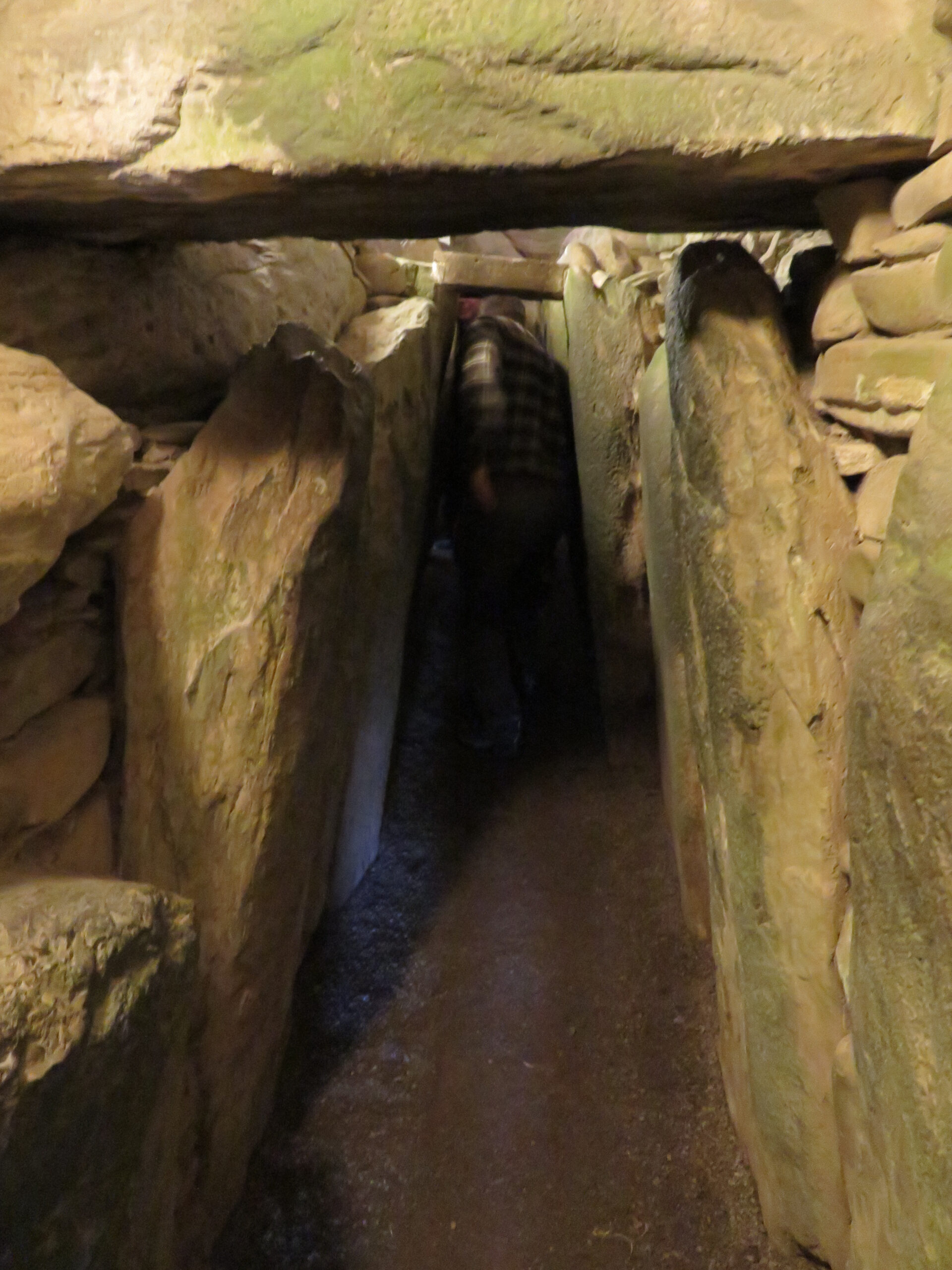
Different shapes, different sizes, same narrow band. And this is also why the question of intention keeps coming up.
The researchers noticed something else. Those frequencies land inside the range of an adult male voice: “Since the resonance frequencies are well within the adult male voice range, one may speculate that some forms of human chanting, enhanced by the cavity resonance, were invoked for ritual purposes.”
They also reported that in a few cases some of the standing stones appeared to have been positioned in ways that improved the chamber’s acoustics, which is the closest the measurements come to suggesting anyone was tuning anything on purpose.
What can and cannot be concluded
A lot of people read this as design. The chambers were built for chanting, for gathering, for whatever a resonating room does to a group of people singing inside it.
It might be right. It cannot be shown from a resonance measurement, and the people closest to the work say so. Devereux, who co-authored the measurements, later granted that the idea of the carvings inside these monuments relating to the acoustics “seems an unlikely proposition.” What stays is that it seems to resonate with the human male voice, which makes it open for different interpretations of the question of why and what they were used for exactly.
What it does to a listener
In 2008 Ian Cook, Sarah Pajot and Andrew Leuchter took the obvious next step. If these chambers resonate around 110 Hz, does that frequency do anything measurable to a person hearing it?
Thirty adults listened to pure tones at 90, 100, 110, 120 and 130 Hz with EEG recording their brain activity. At 110 Hz, activity in the left temporal region was significantly lower than at the other four frequencies. The prefrontal pattern also shifted, from more activity on the left at most frequencies to right-sided dominance at 110.
The order matters here, because it usually gets told backwards. The chambers were measured first, in 1996. The brain study came afterwards and was built to test them. Cook’s paper opens by saying so: “Previous archaeoacoustic investigations of prehistoric, megalithic structures have identified acoustic resonances at frequencies of 95-120 Hz, particularly near 110-12 Hz.”
For me, as the author of this article, I find that 110/111 Hz helps me go deeper into meditation
. It’s a personal preference so far, and it would be interesting to see more research on these kinds of frequencies.
Related reading from the journal
- 432 Hz: between fascination and disillusionment – the same pattern, applied to tuning.
- The hidden confusion around chakra frequencies – fixed frequencies with fixed effects, and where the numbers actually came from.
- Brainwaves, binaural beats – what the frequency ranges do and do not do, with the research behind them.
- From Ecstasy to Trance: an exploration (Part 1) – the states these ancient spaces are assumed to have produced.
- What is cymatics: sound made visible – a measurement you can watch repeat, and the claims that get attached to it anyway.
References
- Jahn, R. G., Devereux, P., & Ibison, M. (1996). Acoustical resonances of assorted ancient structures. The Journal of the Acoustical Society of America, 99(2), 649-658. doi.org/10.1121/1.414642
- Cook, I. A., Pajot, S. K., & Leuchter, A. F. (2008). Ancient architectural acoustic resonance patterns and regional brain activity. Time and Mind, 1(1), 95-104. doi.org/10.2752/175169608783489099
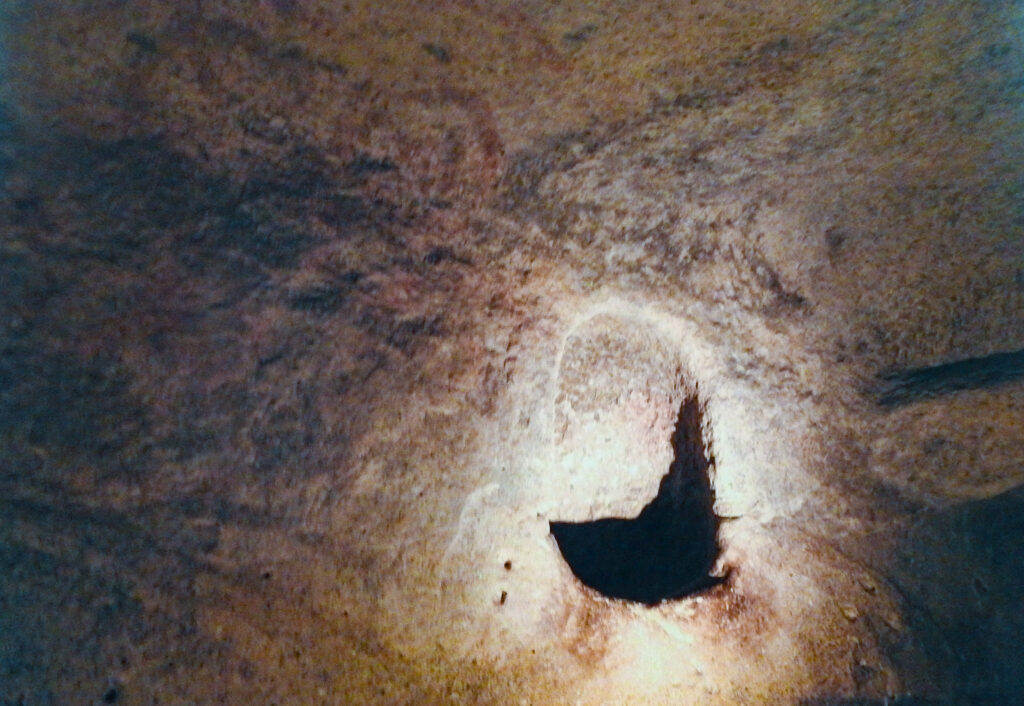
MAIN PHOTO: Hal Saflieni Hypogeum, Middle Level, The Central Chamber, Malta. Photo by xiquinhosilva, CC BY 2.0, via Wikimedia Commons.