The claim turns up everywhere. Around 19 Hz, too low for anyone to hear, sits a frequency that resonates with the human eyeball and produces dread. People call it the fear frequency, and it is said to explain haunted rooms.
It comes from one engineer, one laboratory and one fan.
Where it started
In 1998 Vic Tandy was working in a medical equipment laboratory in Warwick where colleagues reported cold spots, an oppressive atmosphere, a sense of being watched. Tandy traced it to a newly installed extractor fan producing a standing wave at 18.98 Hz. He published the account with Tony Lawrence in the Journal of the Society for Psychical Research under the title “The ghost in the machine”, and followed it two years later with a similar finding in a fourteenth-century cellar in Coventry.
It’s a genuinely good piece of detective work. It’s also a single observation, and the eyeball-resonance figure that travels alongside it has been carried a long way from anything that would support it. Tandy and Lawrence did not measure that frequency directly. They estimated it by calculation and from the effects they observed, and the eyeball figure itself comes from NASA research done at intensities far above anything in an office or a cellar.
We have written about this pattern before. With 432 Hz the number never had a measurement behind it. With 110 Hz it did, and what travelled too far was the interpretation rather than the figure. Either way the qualifiers fall away in transit.
The one good test
The best experiment anyone has run on this was a concert.
On 31 May 2003, at the Purcell Room in London, the composer Sarah Angliss worked with the psychologists Richard Wiseman and Ciaran O’Keeffe and acousticians from the National Physical Laboratory. They laced live piano music with 17 Hz tones, produced by a subwoofer mounted two thirds of the way along a seven-meter plastic sewer pipe. Two concerts, four pieces each, with the infrasound moved to different pieces in the second concert so the effect could not attach to any one composition. Neither the audience nor the performers knew when it was running. O’Keeffe, who did know, spent both concerts locked in a cupboard.
Reported unusual experiences rose by around 22% when the infrasound was present. That figure is the one that circulates. Angliss’s own assessment is the part that does not. She calls the results “tentative” and “inconclusive”, and points out that the audience had arrived knowing the experiment involved infrasound, and that the publicity “suggested we were dabbling in the realm of ghosts”, which she describes as considerable priming and suggestion. The person who ran the study is more careful about it than nearly everyone who cites it.
Someone built the haunted room
In 2009 a team at Goldsmiths did the obvious experiment. Christopher French, Usman Haque, Rosie Bunton-Stasyshyn and Rob Davis built a chamber and put 79 people in it for 50 minutes each, exposing them to infrasound, electromagnetic fields, both, or neither. The infrasound they used combined 18.9 Hz and 22.3 Hz, matching two of the peaks Tandy reported in Coventry.
Everyone was told in advance they might experience something unusual. Plenty of people did. It had nothing to do with what was switched on. From the paper: “Our findings also failed to provide any support for the postulated link between the presence of infrasound and the experiencing of anomalous sensations.”
What did predict a strange experience was a personality measure, and the authors are blunt about where that leaves things: “The most parsimonious explanation for our findings is in terms of suggestibility.” Telling people a room might be haunted was enough. The sound was not.
What the bigger literature says
A large body of research examines inaudible low-frequency sound and health, because wind turbines turned it into a political question. It is the strongest evidence we have on whether sub-audible sound does anything to people, and it mostly points away.
A 2021 review concludes that “there is no evidence that sub-audible infrasound from WTs elicits any reaction”, and that effects are “highly unlikely at sound levels typical for WTs”. A double-blind study exposed noise-sensitive adults to 72 hours of simulated wind turbine infrasound and found it did not move the physiological or psychological measures tested.
What the same literature does find is a solid link between audible turbine sound and annoyance: “the louder the sound (in dB) of wind turbines, the stronger the annoyance response was.”
Annoyance is a weak word for what it describes. In this research it means a sustained stress response, and the WHO treats it as a health outcome in its own right, not as a complaint about a nuisance. Traffic noise alone costs western Europe more than 1.5 million healthy life-years annually, and 654,000 of those are attributed to annoyance. Noise annoyance “represents mental stress”, in the words of one review, and has been “shown to be associated with psychological symptoms and disorders such as depression and anxiety.” The proposed mechanism is ordinary physiology: the noise activates a stress response, and stress hormones, blood pressure and heart rate go up.
The wind turbine work bears the same shape. People reporting symptoms like headache and dizziness scored far higher on annoyance than people reporting none, and self-reported sleep disturbance tracks annoyance consistently. What that particular study did not find was a link between annoyance and cortisol or blood pressure on the day of testing. That is a null result on two biomarkers in one sample, and it is not evidence that living with a sound you cannot escape is harmless.
Relocating the problem
None of this makes low-frequency noise harmless. It relocates the problem.
Low frequencies carry further than high ones and pass through walls that stop everything else. That’s why a neighbor’s subwoofer reaches you as a thud with no music attached, and it’s the reason the current complaints about data centers are worth taking seriously.
Data centers are loud in a particular way: continuous, weighted low, and never off. In Chandler, Arizona, residents began complaining about a constant hum in late 2014; the city tightened its zoning in 2022 and rejected a proposed facility in 2025, with noise a significant factor. In Prince William County, Virginia, residents report levels routinely above 60 decibels, and a 2024 state audit found nearly a third of Virginia’s data centers sit within 200 feet of residentially zoned land. Cooling systems can reach 96 decibels and backup generators up to 105. In New Jersey, where the night-time limit is 50 decibels, the Cumberland County Department of Public Health cited a data center in Vineland this year for breaching it.
Those numbers are all comfortably audible. The version circulating online that these facilities harm people through inaudible infrasound is the weakest available version of a real complaint. The measured problem is a loud low hum next to houses at three in the morning, in a country that has had no federal noise regulator since the EPA’s noise office was defunded in 1981.
That is not a small thing to live with. A sound you can hear, cannot switch off and did not agree to is the exact exposure the health research is about, and the people complaining about it are describing something that shows up in the numbers.
What you can actually do about it
The obvious question, if you live next to one of these, is what helps. The honest answer is that low frequency is the hardest case in acoustics, and most of the usual advice fails for reasons worth knowing.
Masking mostly doesn’t work in this direction. Masking is asymmetric. Low frequencies mask high ones far more easily than the reverse, because the ear’s filters widen upward as level rises. That is why a passing truck wipes out the top of a piece of music and never the bottom. To cover a low hum with higher-pitched sound you need a lot of level, which means solving a noise problem by adding noise. Putting music on loud enough to bury a 60 dB hum leaves you with something louder than the hum.
There is a narrow exception. High-level, high-frequency bands can produce what is called remote masking, reaching down to cover lower frequencies, but it takes intensity. It is a laboratory effect, not a way to sleep.
Earplugs are close to useless here, and the reason is anatomical. Bass reaches the inner ear through bone and tissue, not only through the ear canal, so plugging the canal leaves the path open. Doubling up with earmuffs adds very little at the bottom end. Some sealed designs can even make it worse, because the trapped air between plug and eardrum moves with the pressure.
Noise-cancelling headphones are the one piece of good news, and it surprises people. ANC works by generating an inverted copy of the incoming wave, and that is easiest when the wave changes slowly, which is exactly what a low frequency is. The effective range is below about 1 kHz, with useful figures around 30 dB of extra reduction down there, and performance falls off as pitch rises. So the technology people associate with quieting a plane cabin is aimed precisely at the part of the spectrum that a data center or a neighbor’s subwoofer occupies. It runs out below the audible range, where the diaphragm would need to move too far, but the hum in these complaints is audible, and that is the range ANC is built for.
The structural answer is mass and decoupling. Transmission through a wall depends on its mass and on frequency, which is why low notes pass through what stops everything else, and why a thin partition does nothing. Adding a layer with a damping compound, or decoupling a wall or ceiling so it does not carry the vibration, is what actually moves the numbers. It is incremental rather than absolute, and combining it with a quiet background sound is usually more realistic than trying to eliminate the hum outright.
None of this makes the problem the resident’s to solve. It is worth saying plainly that the effective fix is at the source, and every case above is about a facility that could be quieter and a regulator that is not requiring it.
And the difficulty is not a side note. It is part of why this exposure does damage. Most sound you can get away from: you close a window, you move to the other side of the house, you wait for the road to go quiet at night. A low hum from a building that never switches off defeats all three. It passes through the wall, ignores the earplugs, cannot be covered by anything you would want to listen to, and it is still there at four in the morning.
What makes an exposure harmful is rarely the decibel number on its own. It is the combination of being unable to control it, unable to predict it and unable to escape it, and low-frequency noise from a continuous industrial source scores badly on all three. That is the same reason a dripping tap can keep you awake at a level a rainstorm would not. The rain is escapable in the sense that matters, because it stops, it varies, and nobody imposed it on you.
It also marks the limit of what our own work can do. We make sound for people who want it, in places they choose, and they can take the headphones off. None of that is available to someone living next to a hum. A recording cannot mask it, and offering one as a solution would be dishonest about the physics.
Why we care about the difference
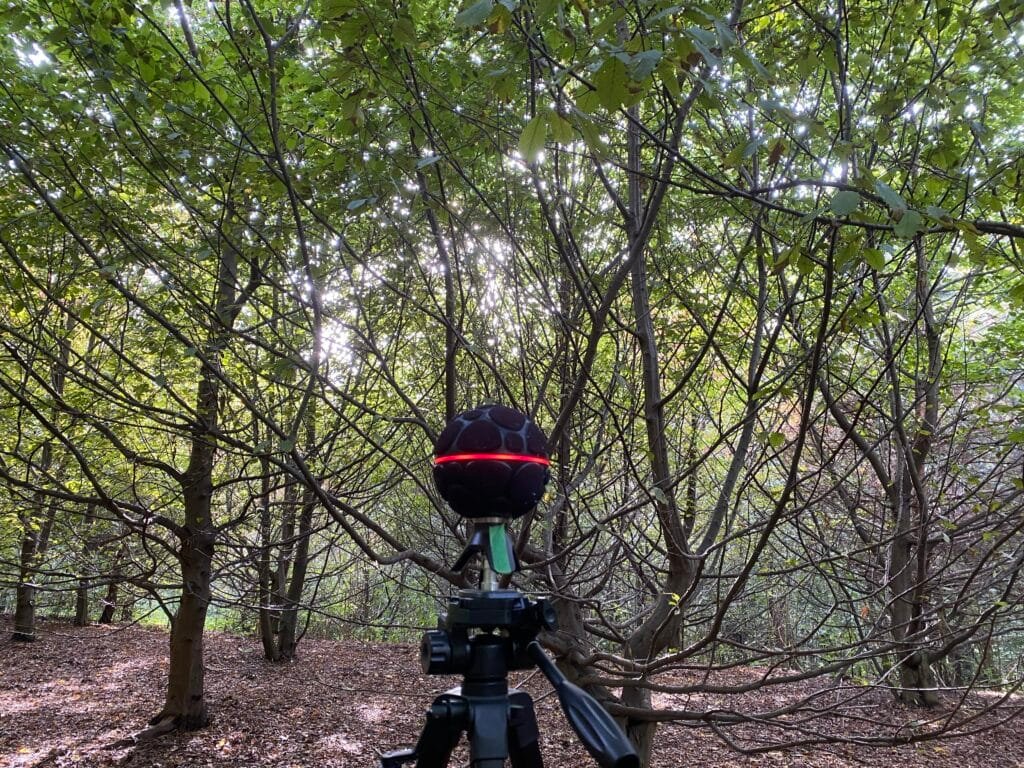
We record places for a living, which means we spend a lot of time with the low end. It’s the part of a recording that carries a room’s size, and the part that survives when everything else is absorbed. It does real work, and it doesn’t need a strange number attached to it.
On 19 Hz, one good experiment found a small effect its own author calls inconclusive, a purpose-built replication found nothing at all, and a much larger literature finds nothing below the hearing threshold. On low frequency generally, it travels, it penetrates, it resists every ordinary way of getting away from it, and when it’s loud enough to hear at 3 am it can make a house unlivable.
The frequency nobody can hear turned out to be the wrong thing to worry about. The one keeping people awake is perfectly audible, entirely measurable, and has been sitting in the complaint logs the whole time.
Related reading from the journal
- 432 Hz: between fascination and disillusionment – how a specific number acquires powers nobody measured.
- Health effects of noise pollution – what sound does at levels people can hear.
- Noise is the new smoking – the case for treating noise as a health exposure.
- The hidden confusion around chakra frequencies – fixed frequencies with fixed effects, and where the numbers came from.
- What is cymatics: sound made visible – standing waves you can photograph, and the claims that get attached to them.
References
- van Kamp, I., & van den Berg, F. (2021). Health effects related to wind turbine sound: an update. International Journal of Environmental Research and Public Health, 18(17), 9133. doi.org/10.3390/ijerph18179133
- Angliss, S., Wiseman, R., O’Keeffe, C., Lord, R., & Simmons, D. (2003). Infrasonic, Purcell Room, London, 31 May 2003. sarahangliss.com/infrasonic
- Tandy, V., & Lawrence, T. (1998). The ghost in the machine. Journal of the Society for Psychical Research, 62, 360-364.
- French, C. C., Haque, U., Bunton-Stasyshyn, R., & Davis, R. (2009). The “Haunt” project: an attempt to build a “haunted” room by manipulating complex electromagnetic fields and infrasound. Cortex, 45(5), 619-629. doi.org/10.1016/j.cortex.2007.10.011
- Environmental and Energy Study Institute (2025). Communities are raising noise pollution concerns about data centers. eesi.org
- Floodlight (2026). One of East Coast’s largest data centers accused of “violating federal law”. floodlightnews.org
- Hahad, O., Prochaska, J. H., Daiber, A., & Muenzel, T. (2019). Environmental noise-induced effects on stress hormones, oxidative stress, and vascular dysfunction. Oxidative Medicine and Cellular Longevity, 2019, 4623109. pmc.ncbi.nlm.nih.gov/articles/PMC6878772
- IRCAM. Psychoacoustic overview: the masking effect. AudioSculpt documentation. support.ircam.fr