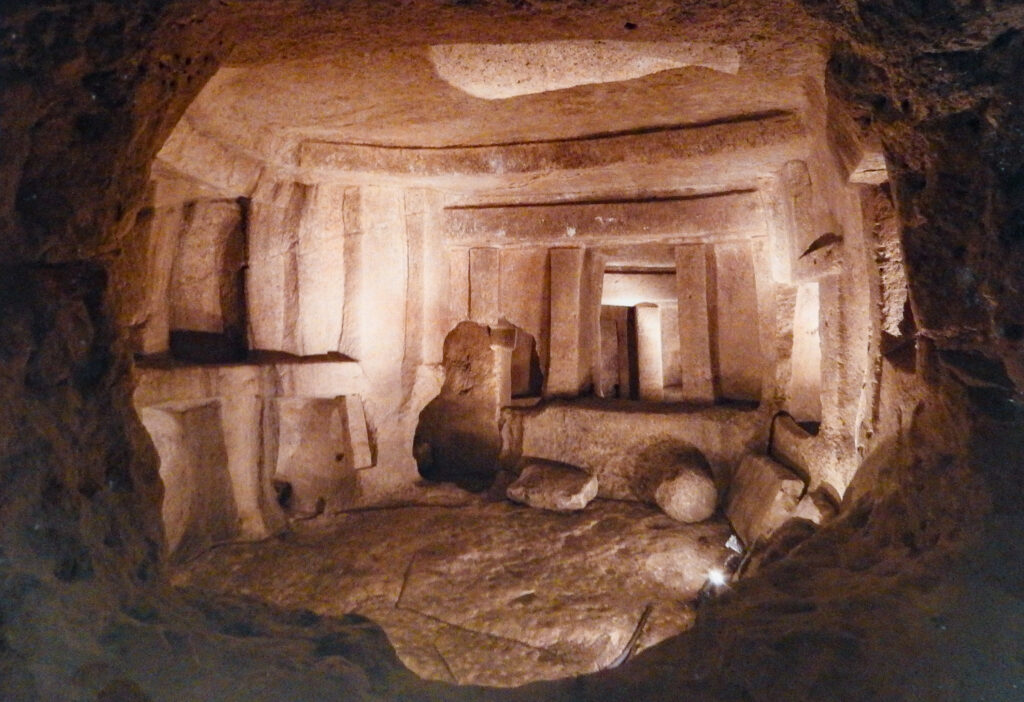
In October 1988, three musicians climbed down into an empty water tank at Fort Worden, a decommissioned military installation on the Washington coast. The cistern held two million gallons when it was in use. Empty, it has a reverberation time of roughly forty-five seconds.
Forty-five seconds means that a note played inside it is still audible three quarters of a minute later. You can’t play quickly in a room like that, because everything you’ve already played is still in the air. You can’t really play over anything either. What you can do is add to what is already sounding and wait.
Pauline Oliveros brought her accordion. Stuart Dempster brought a trombone, and between the three of them there was also a conch shell, a garden hose and lengths of metal pipe. Panaiotis sang and whistled. Al Swanson recorded it on location. New Albion released it the following year.
The title came later, and it came from the writing desk rather than from the tank. Dempster’s account is specific: “When we realized we had a CD, a title was needed. With her typical brilliance, in winter of 1989 Oliveros came up with ‘Deep Listening’ while working on the liner notes.” He is equally specific about why it worked, and it was never only a pun. The title “captured perfectly the two primary references of (1) the huge, underground cistern, and (2) the process by which the music was performed.”
So the joke is real, and Oliveros enjoyed it. But it landed on something she had been doing for seventeen years already.
Hearing is not listening
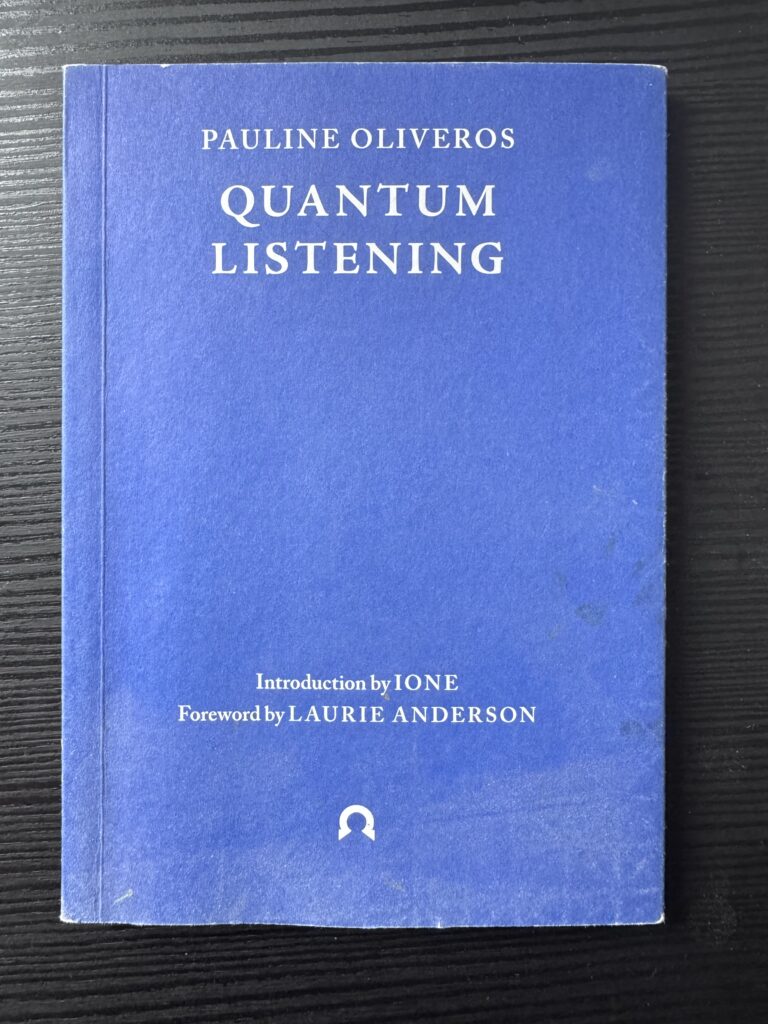
The distinction Oliveros spent her life on is easy to state and hard to absorb. Her formulation, from a 1999 essay: “Hearing represents the primary sense organ – hearing happens involuntarily. Listening is a voluntary process that through training and experience produces culture.”
Hearing is a physical event. Air moves, the eardrum moves, the cochlea converts it, and none of this asks your permission. It continues while you sleep. Listening is what happens afterwards, and it’s optional. You can sit in a room for an hour and never once notice what it sounds like.
The Center for Deep Listening at Rensselaer, which continues her work, defines the practice as exploring exactly this: the difference between the involuntary nature of hearing and the conscious nature of listening. Oliveros herself put the ambition higher than a technique. In that same essay she described the practice as “listening in every possible way to everything possible to hear no matter what you are doing”, and the sentence that follows makes the scope explicit: “Such intense listening includes the sounds of daily life, of nature, or one’s own thoughts as well as musical sounds.”
The scores that anyone can perform
The practical form came first, and it came seventeen years before the name. Sonic Meditations, begun around 1970 and published by Smith Publications in the early 1970s, was written for the ♀ Ensemble, a group of women who met to work on them. They are not compositions in the ordinary sense. There is no notation to read and no training required. They are instructions, often a few lines long, that tell you what to do with your attention.
That is a genuinely radical move for a composer to make. It relocates the work from the performer to the listener, and it means the piece cannot be evaluated by how well it was played. It also means anyone can do it, which was the point. Oliveros was direct about where it sits in the lineage: “Sonic Meditations is the basis of Deep Listening.”
The other root is a research project. In the winter of 1972, at the Center for Music Experiment in San Diego, twenty participants met five days a week for nine weeks, four hours a day, studying mind, body and dream practices and performing pieces from Sonic Meditations daily. Her verdict on it: “This research project seeded Deep Listening practice.”
So by the time three people were standing in a cistern in 1988, the practice was already old. What the recording supplied was a name for it.
The Pauline Oliveros Foundation followed in 1985, and was renamed the Deep Listening Institute in 2005. Oliveros died on 24 November 2016, at 84, having spent six decades insisting that attention itself was the medium.
Why she matters to us
We should be straightforward about this rather than dropping her name in passing. Oliveros is one of the people whose work made ours thinkable, and the debt runs deeper than a citation.
Flower of Sound’s tagline is a new perception of listening. That sentence has a lineage, and a large part of it runs through her. The premise that listening is a skill you can develop rather than a passive reception, that a room is a participant rather than a container, that a recording might be an invitation to pay attention rather than a product to consume: none of that is ours. We inherited it.
The cistern recording in particular sits close to what we do. Three people went into a specific space, let its acoustic behaviour dictate what could be played, and captured the result. They didn’t neutralise the room or treat its forty-five seconds as a problem to be fixed in post. The room was the instrument, and Dempster said as much when he named the second meaning of the title: the process by which the music was performed.
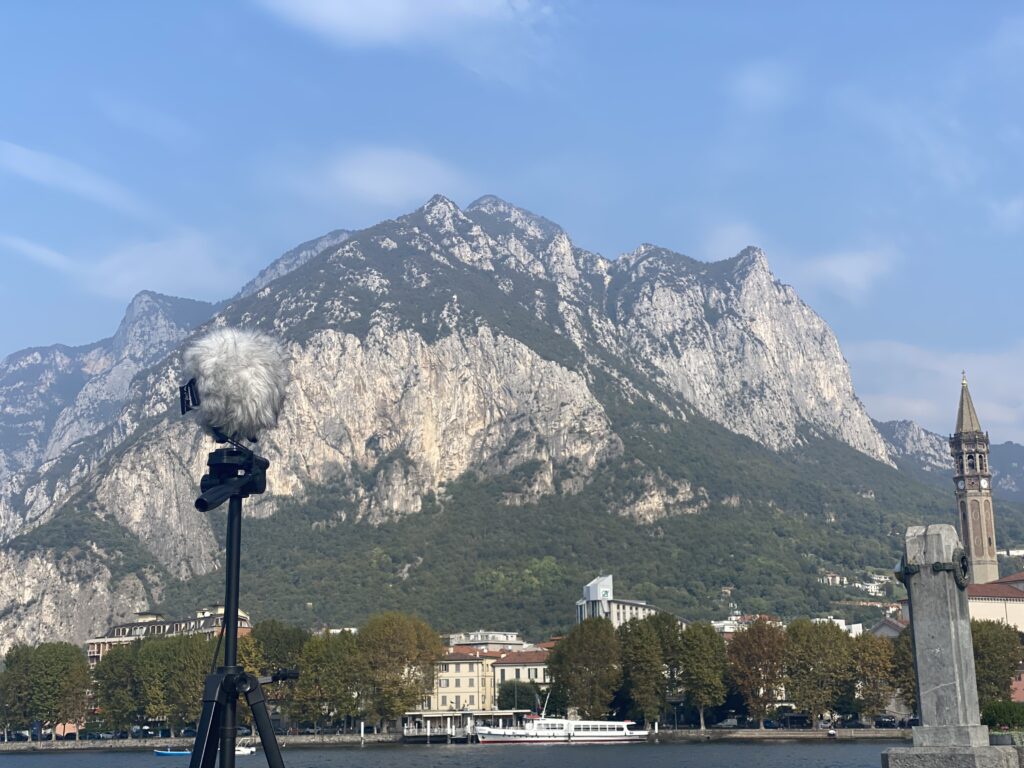
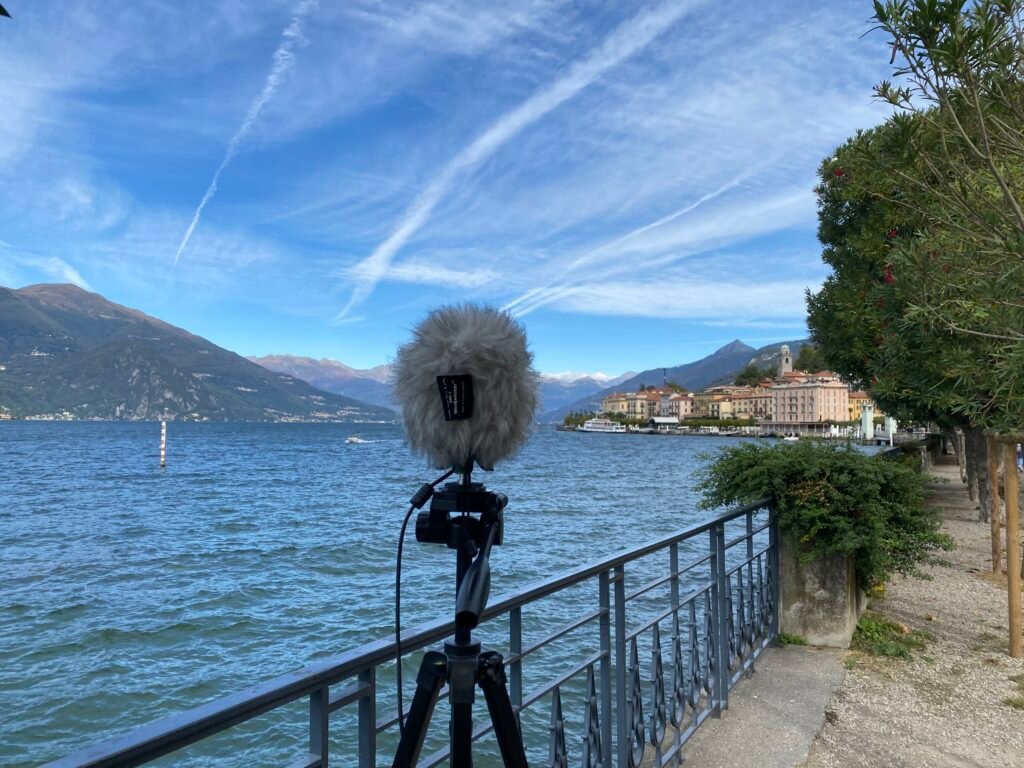
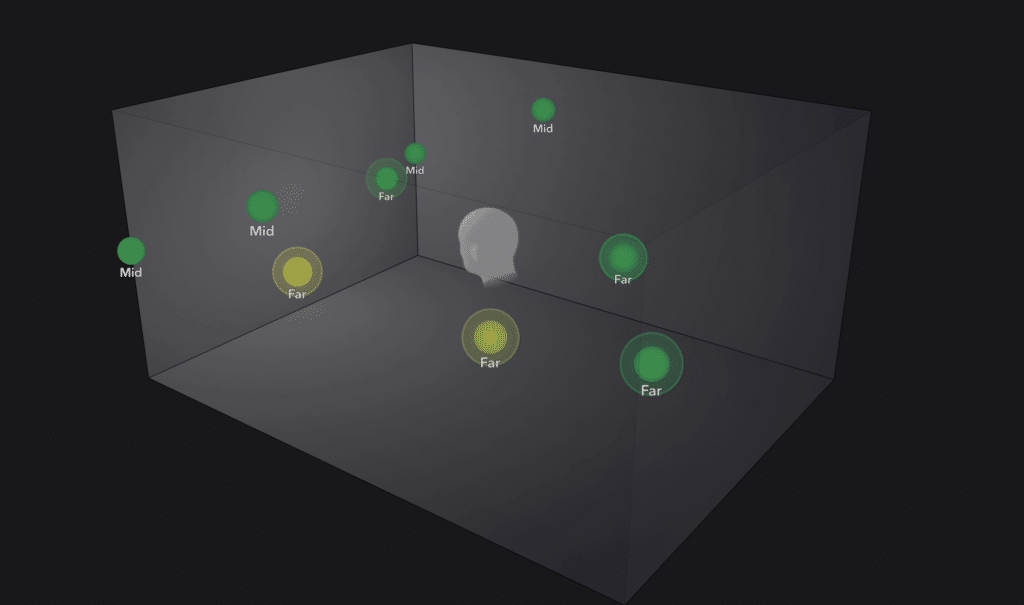
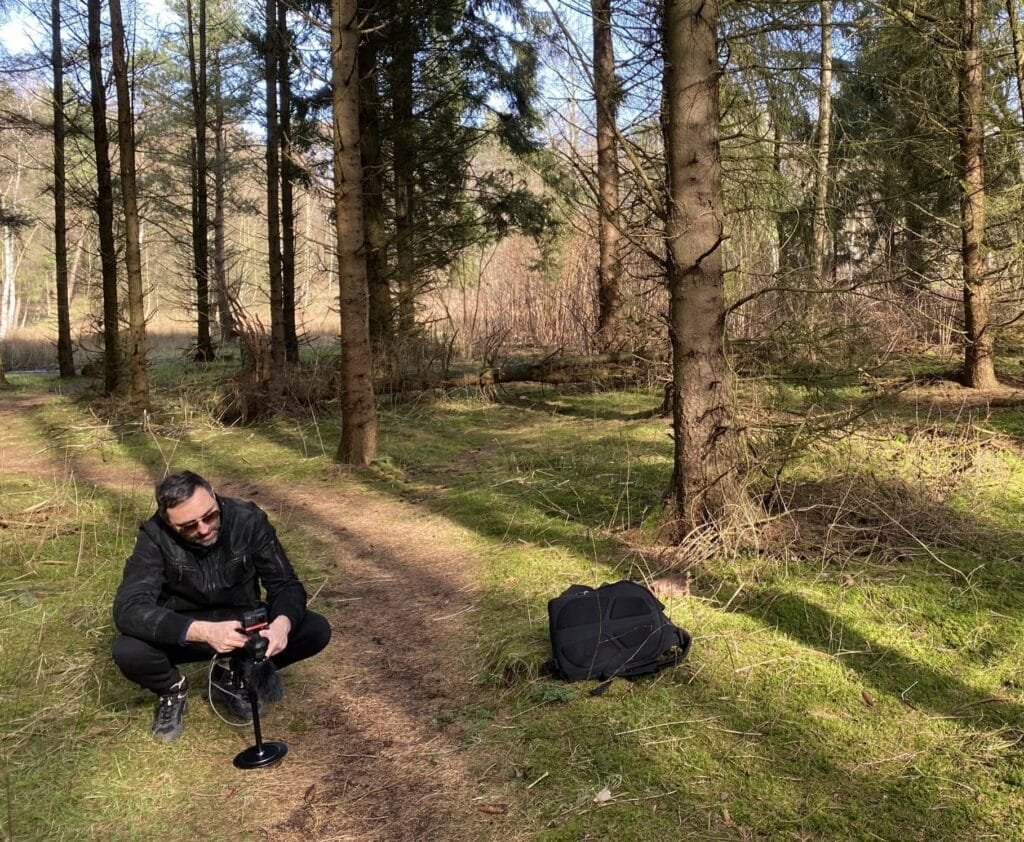
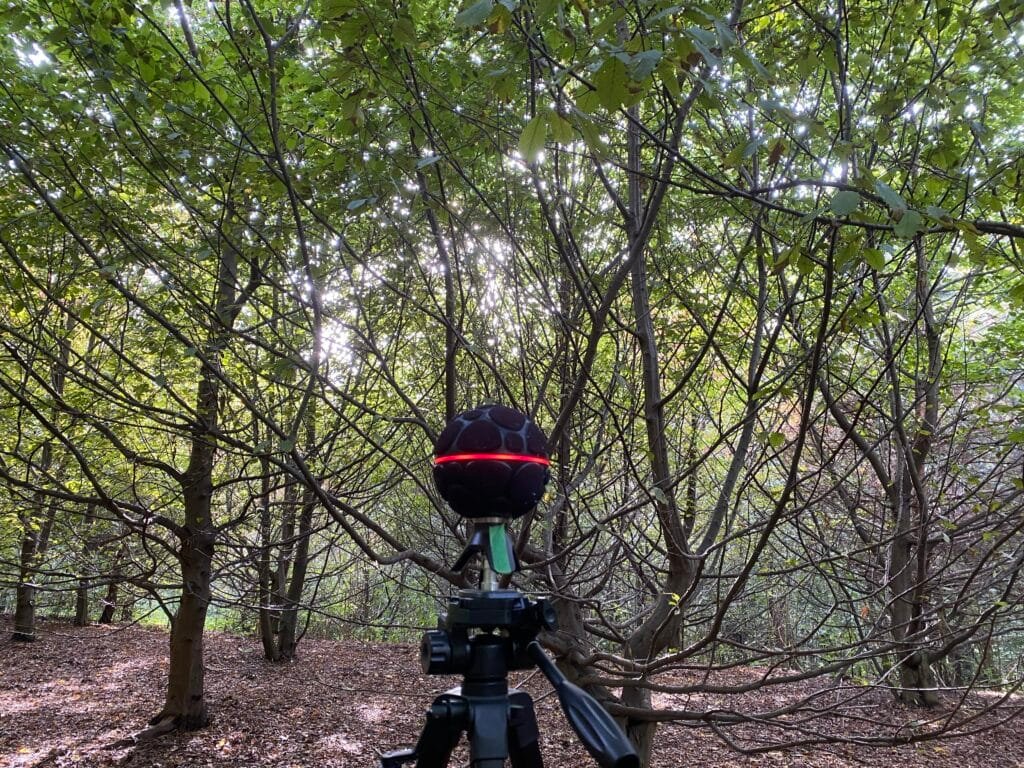
When we record in ambisonics, we are trying to keep that property intact. A first or fourth-order recording of a valley in Val Masino preserves how far away things are and how the space returns them, so that in headphones the geometry of the place is reconstructed rather than flattened into a stereo image of it. The technical goal is a spatial one, and the reason for pursuing it is the one Oliveros arrived at underground in 1988: a room is part of what you are hearing, and removing it removes most of the information.
Where we differ is scope. She was making a practice, and we are making recordings, which are more modest objects. A recording can’t teach anyone to listen. What it can do is make the listening worth the effort, by holding enough detail and enough space that attention has somewhere to go.

Why we build the practice into the room
The recordings are only half of it. The other half is what happens to a person in the first ten minutes of a Listening Session, and that is where Oliveros turns out to be practical rather than philosophical.
People arrive from a train, a client call, an argument about parking. They sit down in a room with an immersive system in it and they are still, in every sense that matters, somewhere else. If we start the audio then, they hear it the way you hear a restaurant: present, pleasant, mostly filtered. The material is doing its work and nobody is there to receive it.
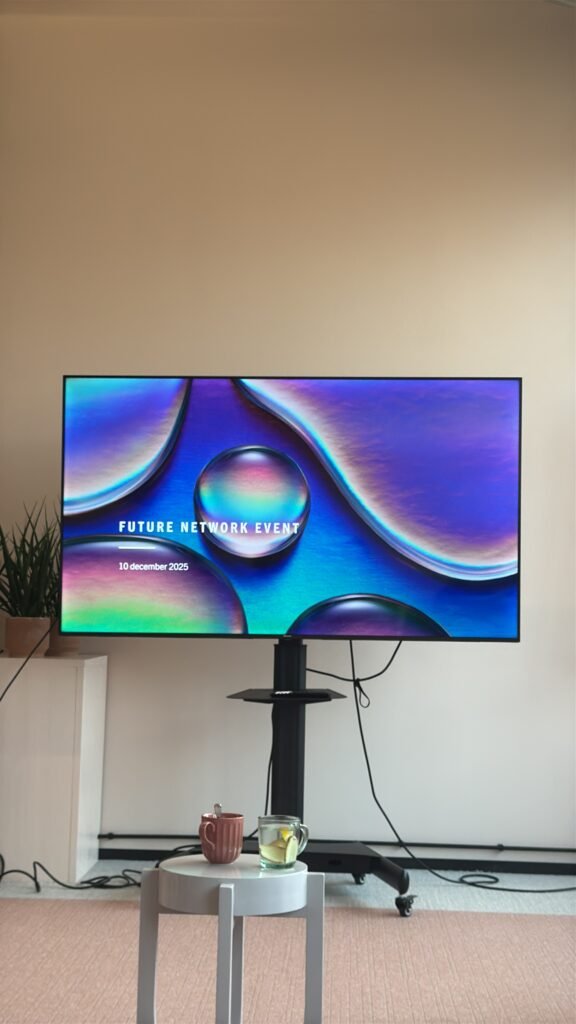
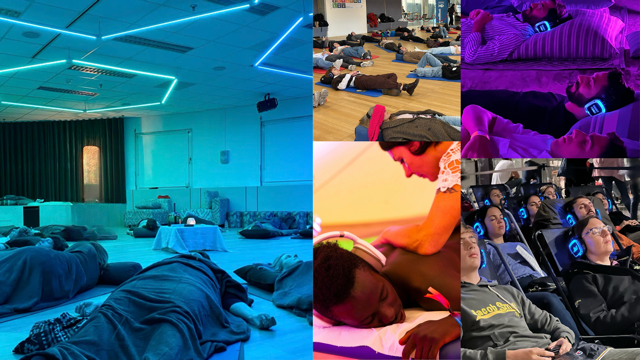
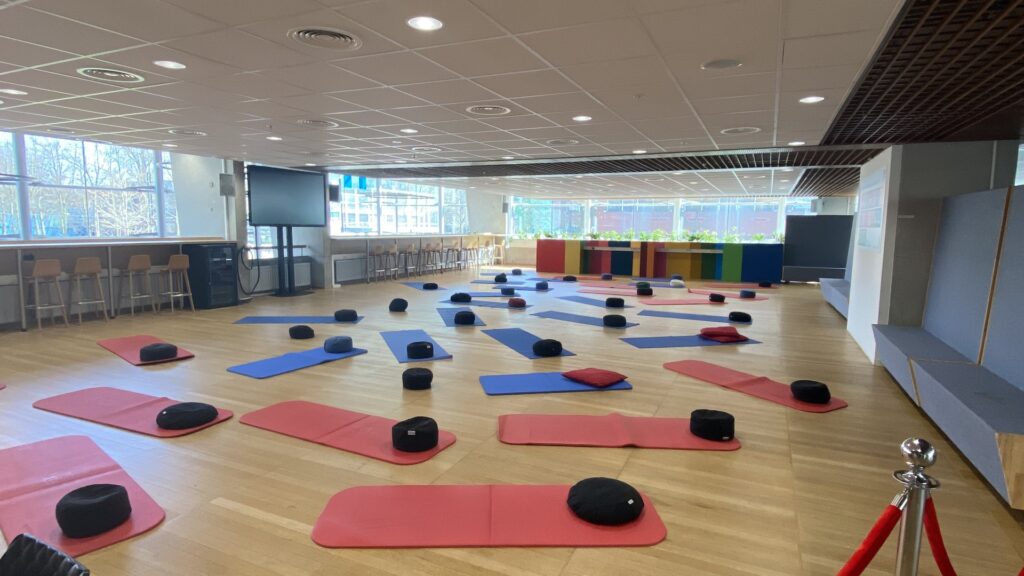
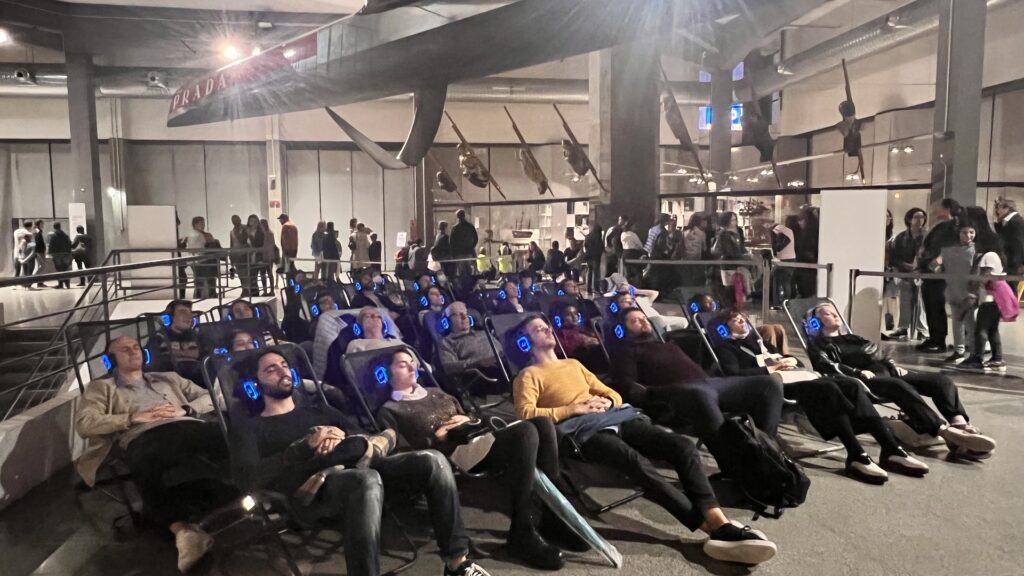
A Listening Session runs sixty to ninety minutes for six to ten people, and it opens with an introduction rather than with sound. That introduction is not housekeeping. It is the part where attention is handed back – where we say what to listen for, that a room has a shape you can hear, that the thing behind you is meant to be behind you. Then the audio starts, into people who have arrived.
The group size is doing the same job, because eight people in a room can hear each other not moving. A hundred people cannot, and in a hall that size the listening becomes private and slightly self-conscious – you are managing your own stillness instead of sharing it. Keeping the room small is a listening decision before it is a business one.
The tea and the conversation afterwards matter for a reason people tend to underestimate. Oliveros’s claim was that listening is trainable, and training needs the thing you noticed to be said out loud. In practice this is where a session earns its value: someone describes hearing the room behind the birds, and three other people realise that is what they were hearing too and did not have words for. What they take home is not the recording. It is a way of paying attention that now has a handle on it.
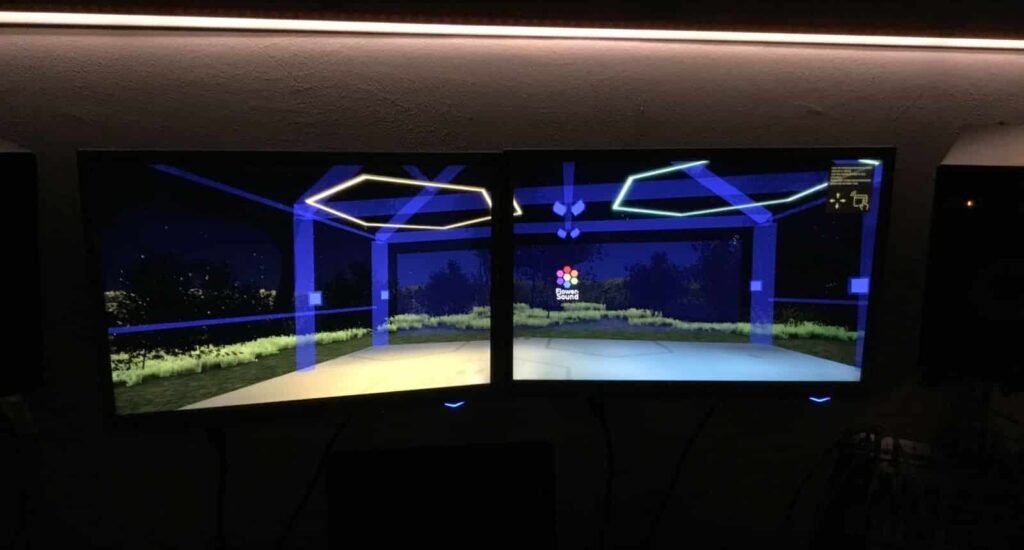
This is also our honest answer to a hard question about the B2B work. A hotel or a treatment room cannot run an introduction before every guest walks in. There is no facilitator, no framing, no tea. What we can do is design for the way people actually listen when nobody has told them to – which means the sound has to work at the level of the involuntary, as the acoustic character of a space, and earn the attention it gets rather than instruct anyone to give it. The Lab is where we learn the difference between those two situations, by watching what people do in the room.
What the practice asks
If you want to try what she meant, the instruction is less mystical than it sounds and harder than it reads.
Listen to everything at once, including what you would normally filter out. The fridge. The traffic two streets away. The sound your own body makes. Don’t sort it into important and unimportant, because that sorting is the habit the practice is trying to interrupt.
Then notice how quickly you stop. Attention slides off ambient sound within seconds, because most of the time filtering is exactly what you want your brain to do. Deep listening is the deliberate suspension of a system that is usually working correctly.
Oliveros’s claim was that the suspension can be trained and that it produces culture rather than just calm. Fifty years of workshops, scores and recordings suggest she was serious. What is available to anyone, right now, without equipment, is the first ten seconds of it.
Which is the useful thing about the order those events happened in. The practice existed for seventeen years before it had a name, was written for people with no musical training, and needed nothing but attention to perform. The cistern gave it a title. It did not give it a barrier to entry.
Related reading from the journal
- The new language of listening – where we first mentioned Deep Listening, and the formats we build for it.
- Why perception matters – why the listener is part of what gets heard.
- Searching for silence – what it takes to record a place with its quiet intact.
- An immersive soundwalk through cities – active listening applied to streets.
- Spatial audio for curious ears (part 2) – the mechanics of how a room reaches your ears.
References
- Oliveros, P. (1999). Quantum Listening: From Practice to Theory (To Practice Practice). Typescript dated Oakland CA, 9 December 1999. Later collected in Sounding the Margins: Collected Writings 1992-2009. Source of the hearing/listening formulation (p. 1) and “listening in every possible way to everything possible to hear no matter what you are doing” (p. 1).
- Oliveros, P. (2005). Deep Listening: A Composer’s Sound Practice. New York: iUniverse. Preface pp. xvii-xviii for “Sonic Meditations is the basis of Deep Listening” and the 1972 Meditation Project as the seed of the practice.
- Dempster, S. (2005). Foreword to Oliveros, Deep Listening: A Composer’s Sound Practice, p. xi. Source for the naming of the album in winter 1989 and the title’s two references.
- Oliveros, P. Sonic Meditations. Composed from around 1970 for the ♀ Ensemble. Baltimore: Smith Publications. Publication year is given inconsistently across sources, including within Oliveros’s own 2005 book.
- Deep Listening Band (1989). Deep Listening. Recorded October 1988 at the Fort Worden cistern, Port Townsend, Washington. Pauline Oliveros, Stuart Dempster, Panaiotis. Recorded on location by Al Swanson. New Albion Records, NA 022 CD.
- Center for Deep Listening at Rensselaer. Deep Listening: definition and practice. deeplistening.rpi.edu/deep-listening