We’ve said this one ourselves. Birdsong makes you feel safe, because birds go quiet when a predator is near, so their singing is the all-clear. It’s a lovely idea, and nobody has tested it.
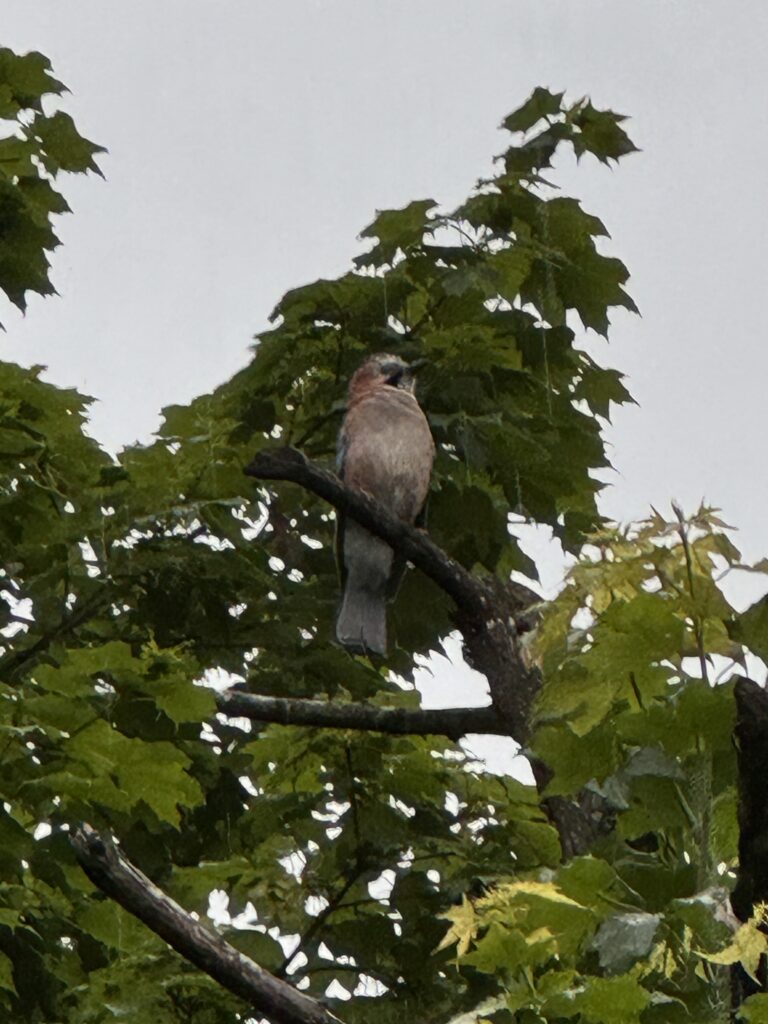
The sentence does come from a real study. Stobbe and colleagues played 295 people six minutes of birdsong or traffic noise in 2022, and the birdsong measurably reduced anxiety and paranoia while the traffic noise pushed depressive symptoms the other way. Those are solid findings. But when the authors reached for an explanation, they wrote that birdsong “might be implicitly associated with a vital natural environment” or “could signal the absence of acute threat.” Might. Could. It is a suggestion in a discussion section, offered as one possible mechanism among several, and it was never measured. Somewhere between that paper and the internet, the maybe fell off.
What is notin doubt is that people reach for birdsong when they want to recover. Eleanor Ratcliffe and colleagues at the University of Surrey interviewed twenty adults in South East England about the sounds they associated with stress recovery and attention restoration, and birds came top: of 186 instances of natural sound raised across the transcripts, bird songs and calls accounted for 35 per cent, ahead of water at 24. Not every bird made the list – crows and magpies did badly, and one participant mentioned horror films – but the pattern was clear enough. The study gets cited loosely, so the details matter: twenty people talking to a researcher about sounds they imagined, with no recordings played and nothing measured, and the authors end by saying future work should “quantitatively examine” what they found. So it tells us birdsong is where people go when they want to recover, without telling us why it works.
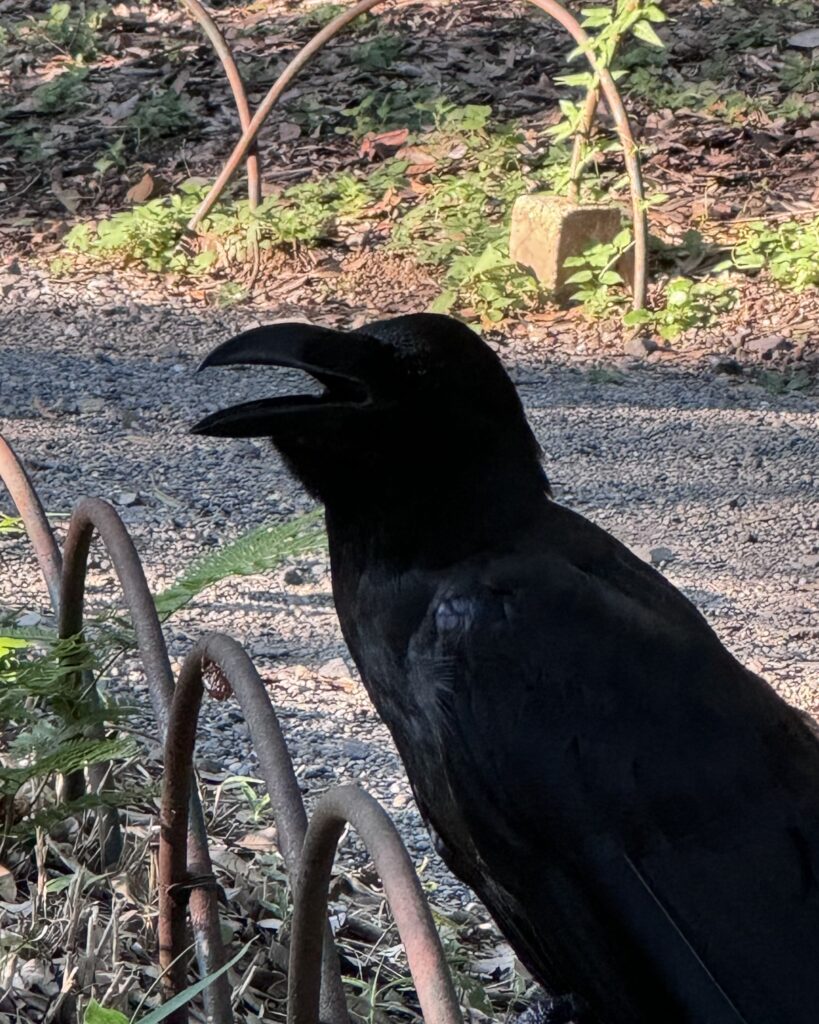
Safe and relaxed are not the same thing
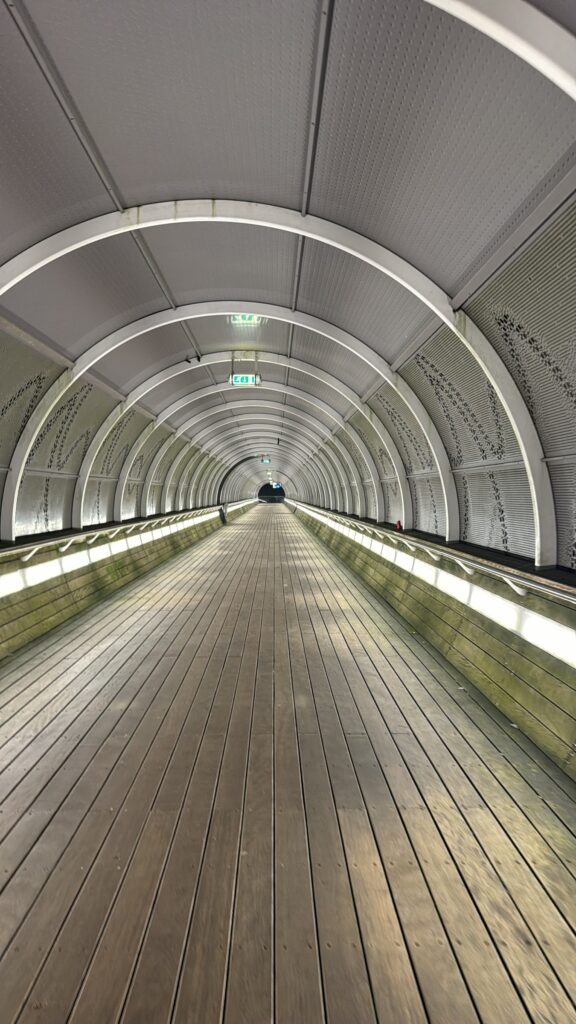
Cristina Calleri and colleagues at Politecnico di Torino, working with University College London, built an acoustic and visual simulation of the same pedestrian underpass and showed 31 people nine versions of it, varying the sound and the lighting independently. Sound changed how safe the space felt (F(2,60) = 6.508, p = 0.003). Lighting did not. Ask most people how to make an underpass feel safer and they will reach for a brighter lamp.
Feeling safe isn’t a softer word for feeling relaxed; it comes first. Tjeerd Andringa and Jolie Lanser at the University of Groningen built a cognitive model around this in 2013, and their phrasing is careful: appraising a situation as safe “allows for mind-states for (mental) restoration.” Allows for. Safety is the gate; rest is what becomes possible once you are through it. Without enough signals that nothing needs your attention, the older parts of the brain keep attention on alert, and the newer parts never get released to do anything else.
Their model also explains something most people have felt in a hotel room or a rented flat. A space can be quiet, clean, even beautiful, and still not let you settle. In their words, “not all uninterrupted mind-states are restorative.” Quiet is not the same as safe either.
What counts as a safety signal, in their account, is not dramatic. Andringa and Lanser split a soundscape into a foreground of loud, often distant events and a background of subtle nearby ones, and it is the background they say carries safety. Their term for it is proximal situational awareness. The loud events tell you what is happening somewhere; the quiet continuous layer tells you whether anything near you has changed. In the surveys they review, wind, water, rain, birds and countryside were the categories nobody rated unpleasant, while cars, traffic and construction work were.
That layer is also the one people never mention when describing a room, which is part of why it gets designed out of buildings.
We have measured the alarm far better than the all-clear
The clearest example is a 2015 study by Luc Arnal and colleagues, published in Current Biology, and it names the quality precisely. Screams occupy an acoustic niche of their own: they carry fast fluctuations in loudness between 30 and 150 Hz, a quality called roughness, and ordinary speech never goes there, since the modulations that carry the meaning of words sit below 20 Hz. What makes the finding land is where those sounds are processed. “The amygdala, but not auditory cortex, is specifically sensitive to temporal modulations in the roughness range.” Rough sounds reach the danger circuitry directly, without waiting for you to work out what they are.
A scream, a baby’s distress cry, a buzzer, a car horn, a smoke alarm, a siren. Arnal’s team tested artificial alarms against musical instruments and found the alarms sitting squarely in the rough band while strings and keyboards stayed out of it. Alarm designers arrived at that band by trial and error long before anyone scanned a brain to find out why it worked. It also means the quality that makes a sound feel threatening is not loudness or pitch, but that specific rattling, buzzing, distorted texture – which is why a distant siren still gets you and a much louder passing bus does not.
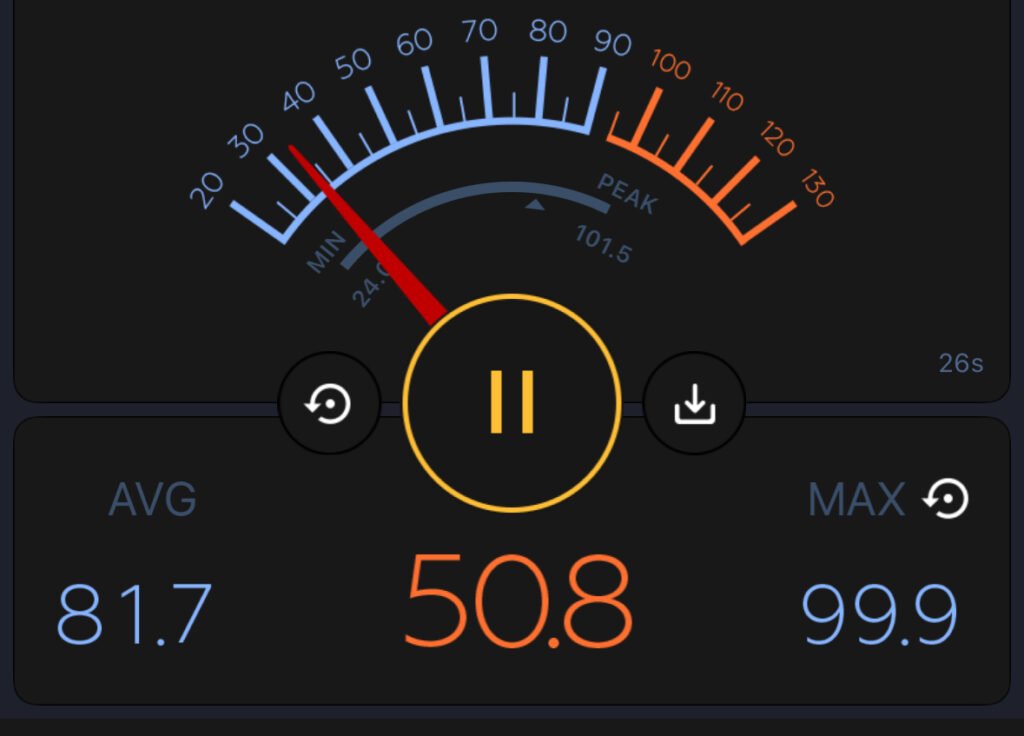
Then there is sound you cannot consciously hear at all. A study published this April in Frontiers in Behavioral Neuroscience played 36 people music with or without an 18 Hz tone underneath it. They could not detect the tone above chance, and they had no expectations about it. Their salivary cortisol went up anyway, alongside irritability and a more negative reading of what they had heard. The everyday sources of that kind of low rumble are dull ones: ventilation, air conditioning, heating and building plant, rumbling pipes, heavy traffic, the sort of thing that sits at 70 to 80 decibels within a hundred metres of the machine making it. It is a small study, the sample skewed female, and the authors say plainly that earlier work on infrasound conflicts, so we would not build a claim on it alone. But it points somewhere uncomfortable, because something nobody in the room could hear still moved a stress hormone.
So we have a precise account of the acoustics of alarm, down to the modulation rate, and for reassurance we mostly have a model and a good hypothesis.
What the absence of sound does
The obvious guess is that if noise is the problem, silence is the answer. It is not, and the same Groningen model says why: a monotonous environment “has few sounds that stand out on a background not indicative of safety.” Nothing is reporting in. An anechoic chamber, the deadest room that can be built, is famously hard to sit in for long, because with no reflections your ears lose the room and you start hearing your own body instead.
Nature makes the point more sharply, because in a forest sudden quiet isn’t peace, it’s an alarm. And birds learn which sounds mean danger rather than being born knowing. In the same issue of Current Biology that carried the screams paper, Robert Magrath and colleagues trained wild superb fairy-wrens by playing an unfamiliar sound while a model predator glided past. The birds ignored that sound at first. After two days, eight of ten fled when they heard it alone, and none of the control birds did.
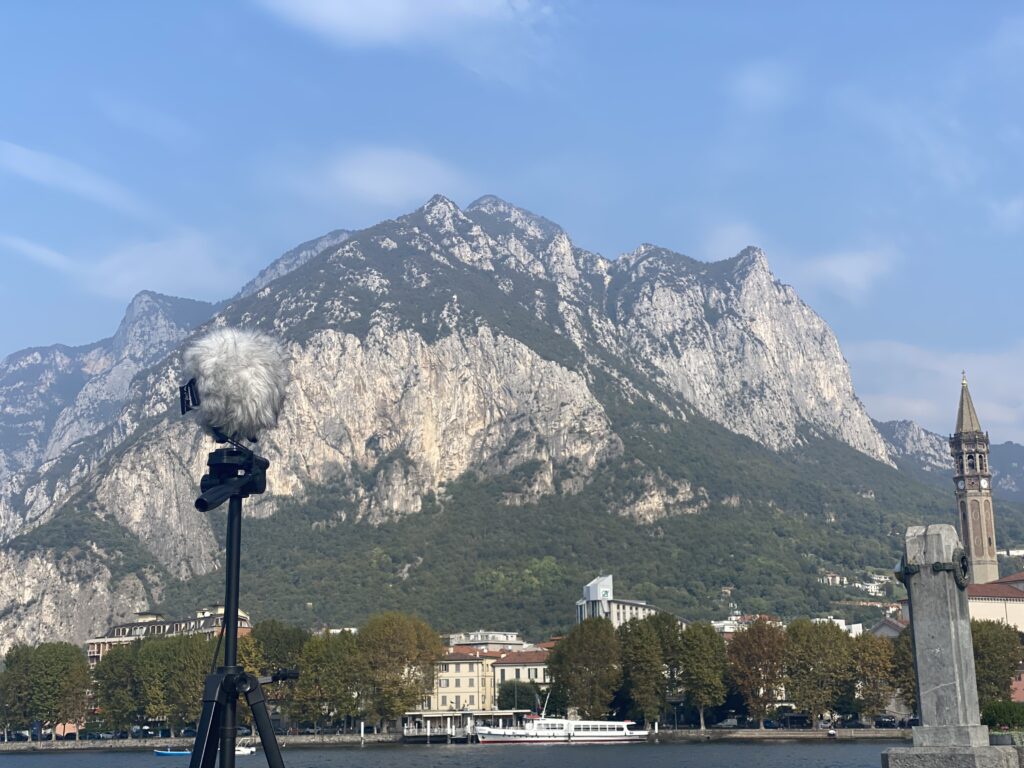
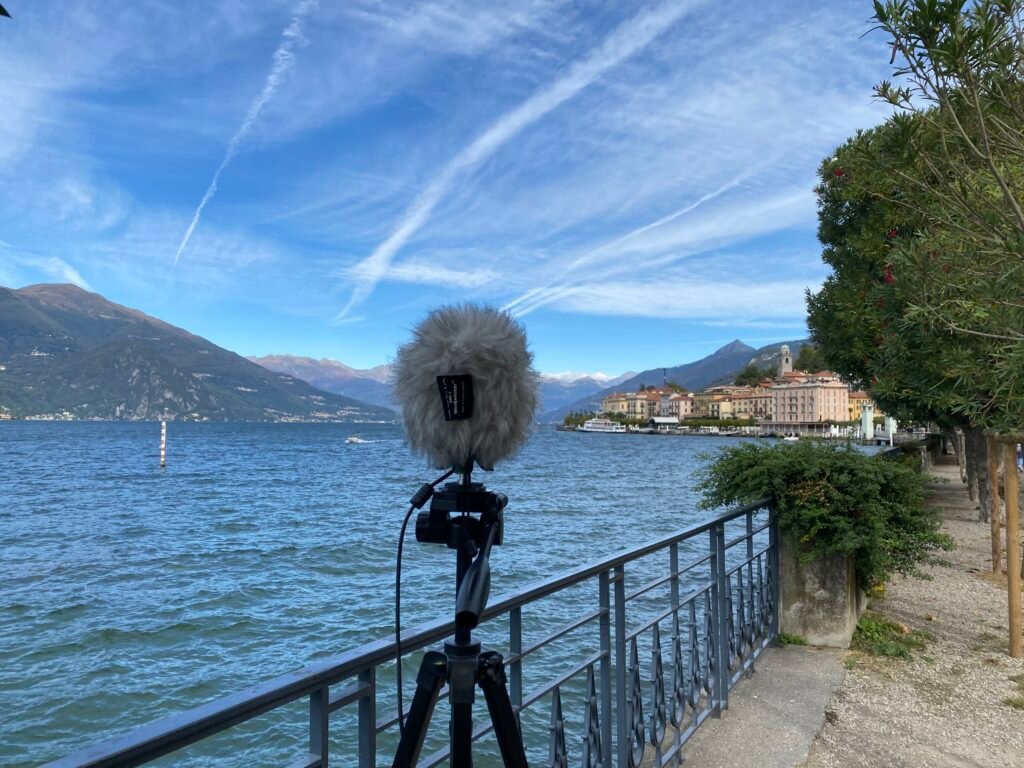
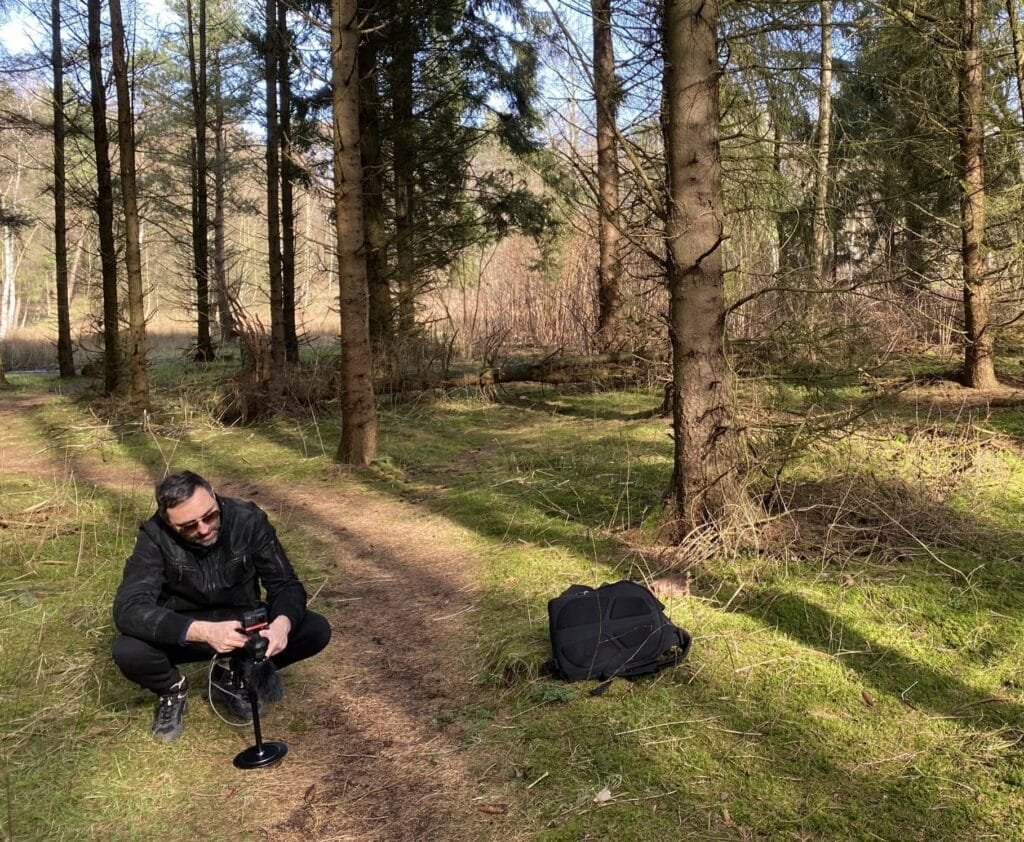
That said, most quiet in a forest is not an alarm at all, and this is where recording teaches you something the studies don’t. The quietest hour we meet in the field is usually the middle of a hot afternoon, when the heat shuts everything down and there is no predator anywhere. Deep winter does the same. A forest that has gone quiet over an hour is resting; what carries information is a soundscape that stops all at once, the way it does when something moves through. It’s the change that reports, not the level. That distinction is ours from years of waiting with a recorder rather than anything a paper has measured, and it is one of the reasons we choose the hour as carefully as the place.
Which brings the question back around to where our last article left it. If recognition is what lets a familiar forest settle you, learned recognition is also what makes an alarm mean something.
Our reading, not a research finding
What reassures you is probably not any single sound, but the ordinary continuing.
A soundscape that keeps going, at the pace it should, tells you that nothing has interrupted it. Not a special bird, not a magic frequency, just the sense that the place is behaving as it usually does. Andringa’s model points this way too, since he locates safety in the subtle background rather than the loud events, in what he calls proximal situational awareness. The quiet layer, not the headline.
That is our own logic rather than a measured result, and what we can say is that when we choose a location and an hour to record, we’re choosing which of those small ongoing sounds survive into the recording, which is a judgement about content rather than format.
As for the original claim, it may well turn out to be true, since birds do fall quiet when a hawk passes. It’s just that the study everyone cites for it never tested that part, and until someone does, the sentence belongs in the maybe column. Let us know if you’ve seen research that actually measures this – we’d like to read it.
Related reading from the journal
- Your brain on nature sounds: what the research actually shows – the wider evidence base for nature sound, and the cornerstone this article sits on.
- Nature sounds and sleep – what happens when nature sound is used for rest, where the safety question matters most.
- Health effects of noise pollution – the other side of the same coin, and what unwanted sound does over time.
- Searching for silence – how hard genuine quiet is to find, from the recording side.
- Why nature sounds feel more real in 3D and what that does to your body – the format question, as distinct from the content question this article asks.
References
All studies cited above were verified against the original peer-reviewed publication. Open-access where available.
- Andringa, T. C., & Lanser, J. J. L. (2013). How pleasant sounds promote and annoying sounds impede health: a cognitive approach. International Journal of Environmental Research and Public Health, 10(4), 1439-1461. doi.org/10.3390/ijerph10041439
- Arnal, L. H., Flinker, A., Kleinschmidt, A., et al. (2015). Human screams occupy a privileged niche in the communication soundscape. Current Biology, 25(15), 2051-2056. doi.org/10.1016/j.cub.2015.06.043
- Calleri, C., Astolfi, A., Pellegrino, A., et al. (2019). The effect of soundscapes and lightscapes on the perception of safety and social presence analyzed in a laboratory experiment. Sustainability, 11(11), 3000. doi.org/10.3390/su11113000
- Magrath, R. D., Haff, T. M., McLachlan, J. R., & Igic, B. (2015). Wild birds learn to eavesdrop on heterospecific alarm calls. Current Biology, 25(15), 2047-2050. doi.org/10.1016/j.cub.2015.06.028
- Ratcliffe, E., Gatersleben, B., & Sowden, P. T. (2013). Bird sounds and their contributions to perceived attention restoration and stress recovery. Journal of Environmental Psychology, 36, 221-228. doi.org/10.1016/j.jenvp.2013.08.004
- Scatterty, K. R., VonStein, D., Prichard, L. B., et al. (2026). Infrasound exposure is linked to aversive responding, negative appraisal, and elevated salivary cortisol in humans. Frontiers in Behavioral Neuroscience, 20, 1729876. doi.org/10.3389/fnbeh.2026.1729876
- Stobbe, E., Sundermann, J., Ascone, L., & Kühn, S. (2022). Birdsongs alleviate anxiety and paranoia in healthy participants. Scientific Reports, 12, 16414. doi.org/10.1038/s41598-022-20841-0